Why You Should Plan a Sunset-Themed Trip in 2026
21 September 2026
Most people treat a sunset as a closing act. It happens after the museum, after the hike, after dinner. You glance up, take a photo, and move on with your evening. That habit is worth breaking. A sunset-themed trip flips the usual order of a travel day, and 2026 is a particularly good year to try it. The reasons are partly astronomical, partly practical, and partly about how travel itself is changing.
This is not about chasing a single perfect orange sky. It is about building an itinerary around a daily event that is predictable, free, and different every time. Done well, it changes where you sleep, when you eat, which tours you book, and how you remember a place. Done badly, it becomes a series of disappointing drives to crowded viewpoints. The difference is planning, and that is what this article covers.
What a Sunset-Themed Trip Actually Means
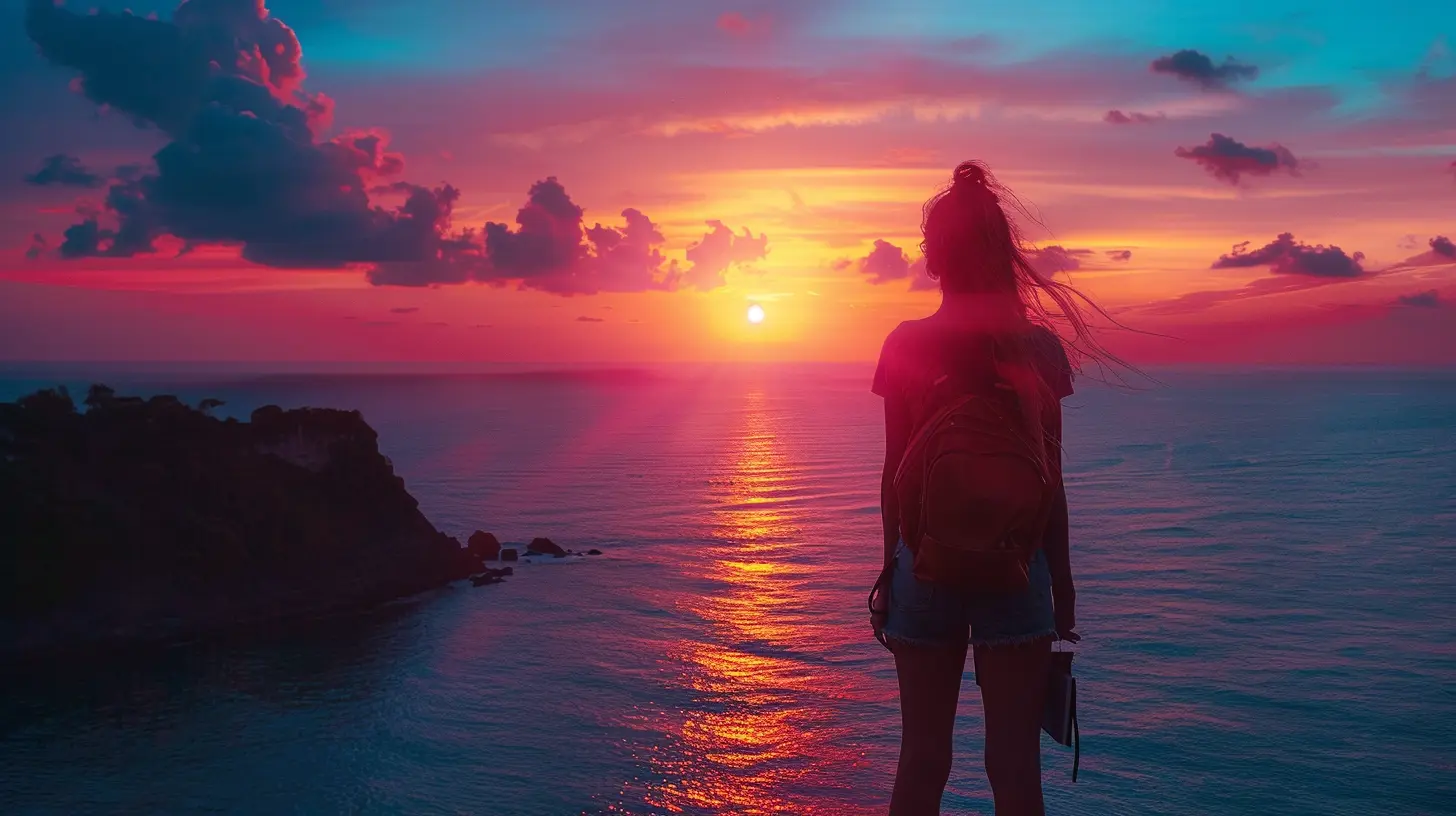
A sunset-themed trip is not simply a vacation where you happen to see sunsets. It is a trip where the sunset is the anchor of each day. Everything else gets arranged around it.Think of it the way photographers think about light. Serious landscape photographers do not tour all day and hope for good light at the end. They plan their locations around where the sun will be at a specific hour. They scout in the afternoon. They arrive early. They stay late. The rest of the day is logistics.
You do not need to be a photographer to borrow this logic. You just need to accept one constraint: for a set number of evenings, you will be somewhere specific, facing roughly west, roughly 30 to 60 minutes before the sun goes down. That constraint sounds limiting. In practice, it forces better decisions.
The core idea in one sentence
Pick a region, then pick a sequence of sunset locations within it, then let the daylight hours fill themselves around those fixed points.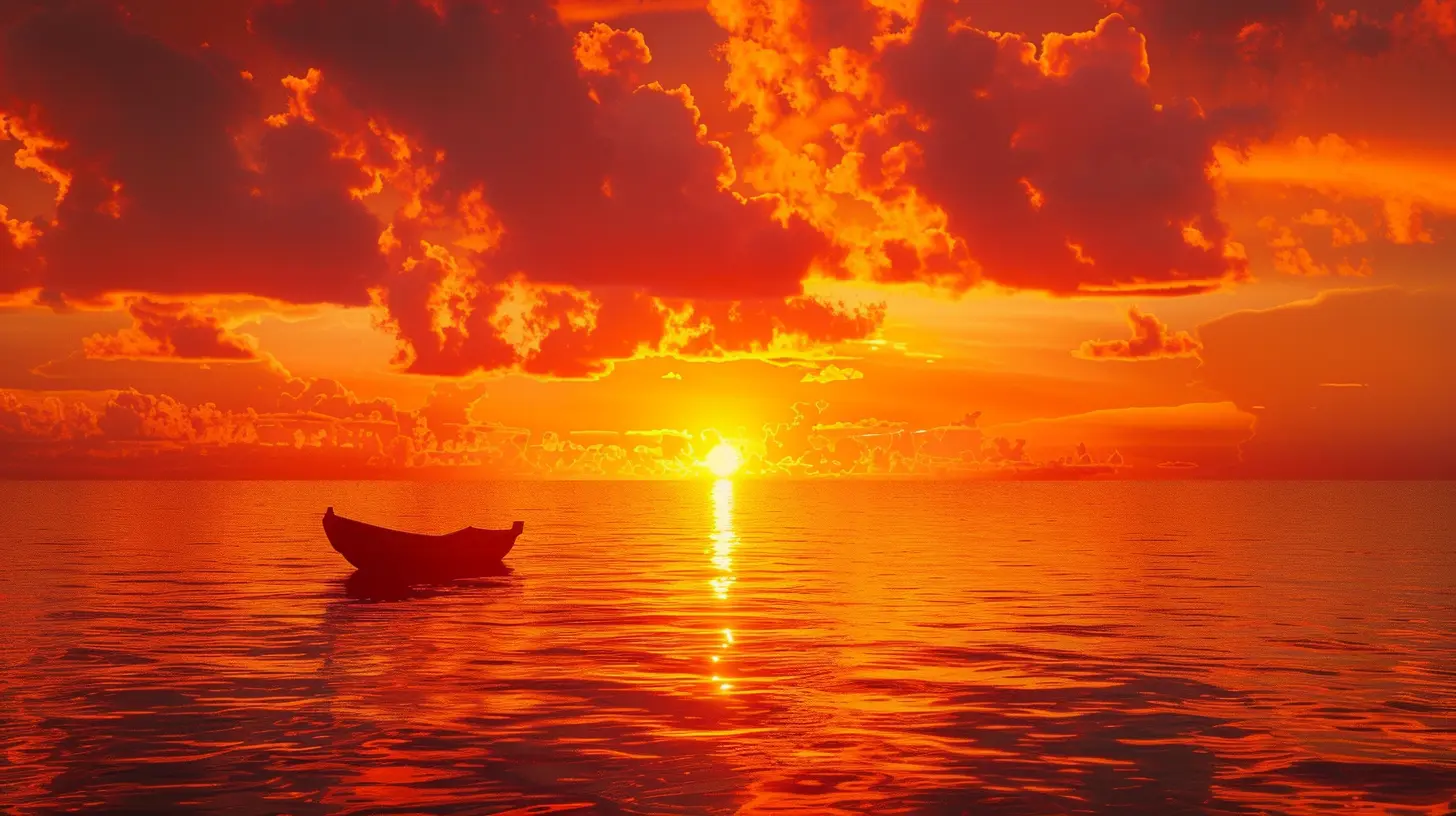
Why 2026 Specifically
Any year works for a sunset trip. But 2026 has a few features that make it worth targeting.First, travel demand continues to shift away from the classic July and August crush in many regions, as more travelers with flexible schedules move trips into shoulder months. That matters enormously for sunset planning, because the best sunset spots are often small, exposed, and capacity-limited. Fewer people at a clifftop or a west-facing beach at golden hour is the single biggest quality upgrade you can get, and it costs nothing.
Second, a large number of travelers are now building trips around a single theme rather than a destination list. Food trips, cycling trips, cold-water swimming trips. The sunset trip fits this pattern and benefits from it, because themed trips tend to produce tighter itineraries and less wasted transit.
Third, and this is the part most people miss, 2026 is a year when several well-known sunset destinations are actively managing crowds. That means timed entries, shuttle systems, parking reservations, or seasonal closures in some places. This is not a reason to avoid them. It is a reason to plan earlier than you would have in the past.
I will not pretend to know exact 2026 opening dates, fees, or reservation rules for specific sites. Those change constantly. Treat every named place in this article as a starting point for your own verification, not as a confirmed fact.
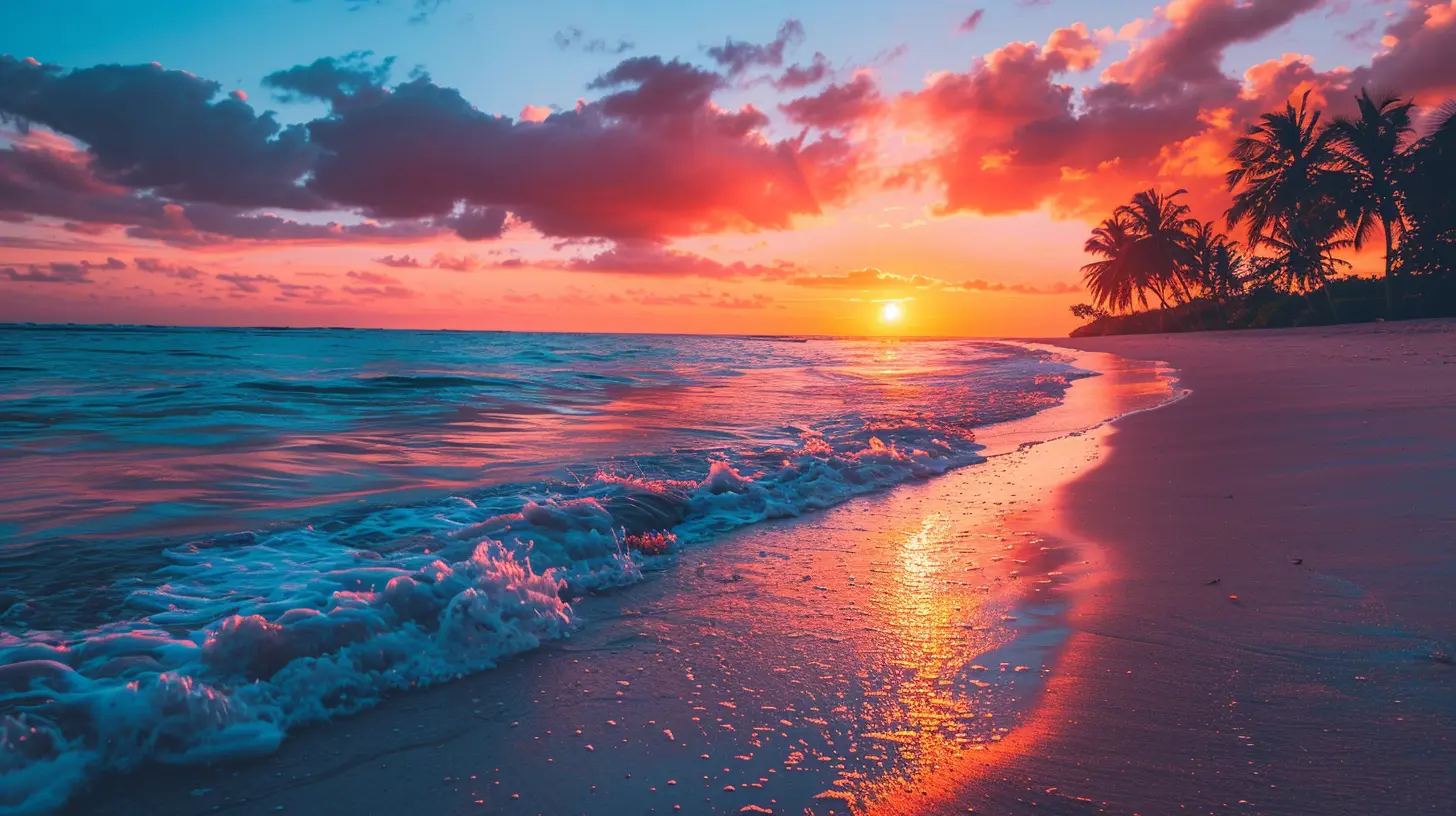
The Real Reason Sunsets Work as a Travel Anchor
There is a practical case for this beyond romance.Sunsets are the most reliable spectacle in travel
A waterfall can be dry. A museum can be closed. A wildlife sighting is never guaranteed. A sunset, by contrast, happens every clear evening at a time you can calculate to the minute, months in advance. For a trip planner, that is an unusually stable asset.They are free and universally available
You do not need a ticket, a guide, or a reservation in most cases. This makes the sunset trip unusually accessible. A family on a tight budget and a traveler with a generous one can build the same structure and get a similar emotional return.They impose rhythm on a trip
The biggest failure mode in travel is drift. You wake up late, wander, eat a long lunch, and suddenly it is dark. A fixed evening event solves this. You know you need to be somewhere at 19:40. That single fact organizes the entire day.They equalize destinations
A modest town with a west-facing hill can outperform a famous city on a given evening. This is genuinely useful when you are choosing between places. It gives you a second criterion beyond "what is there to do."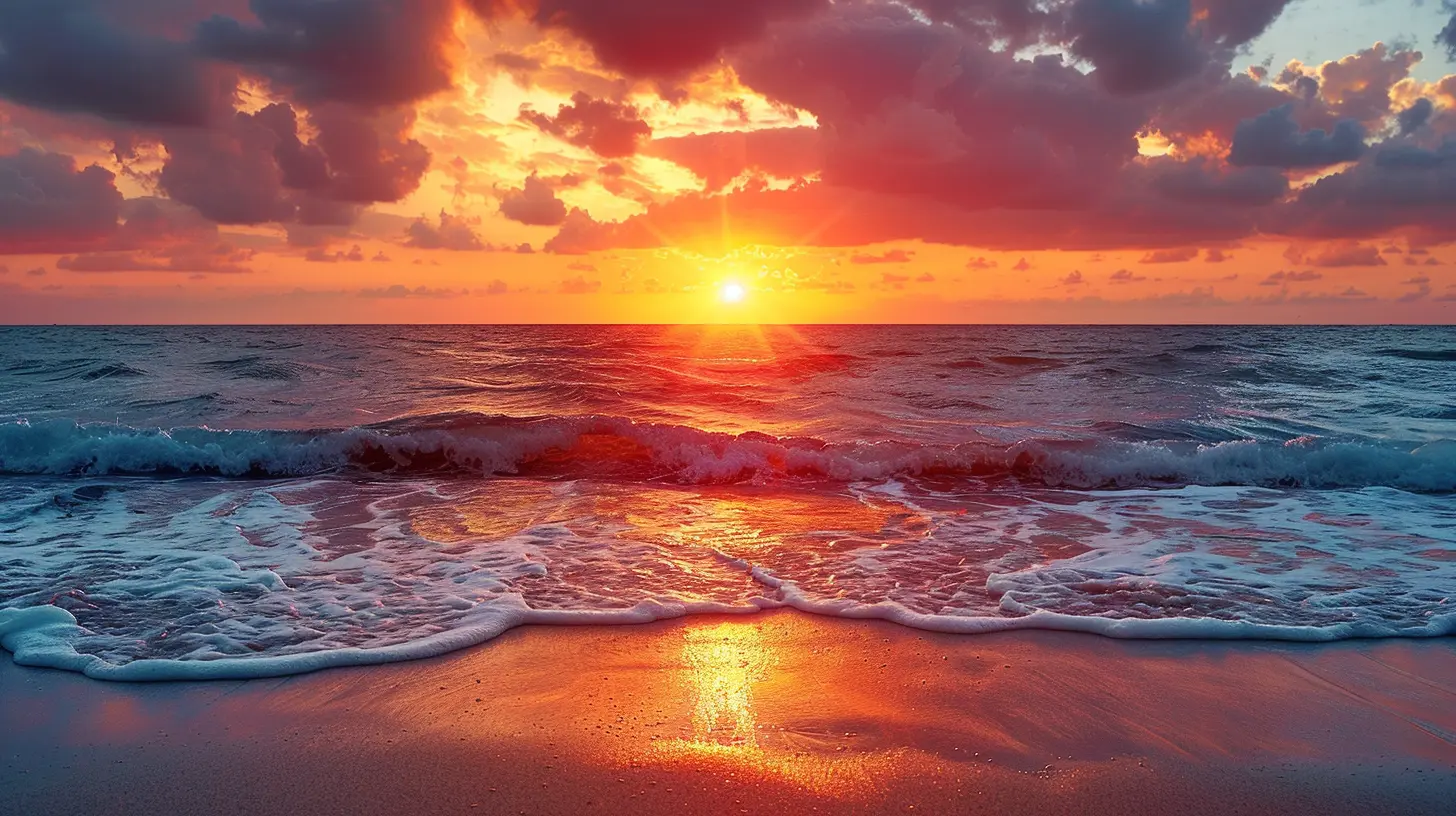
The Science and Psychology, Briefly
Two things are happening when a sunset lands well.The physical part is about atmosphere. Light travels through more air at low sun angles, which scatters short blue wavelengths and lets longer red and orange wavelengths through. Dust, humidity, salt, and cloud layers all change the result. This is why a sunset over a desert, a sunset over the ocean, and a sunset over a humid forest look nothing alike even at the same latitude.
The psychological part is about anticipation and closure. A sunset is a slow, predictable event with a clear endpoint. That combination tends to produce a sense of calm and completion. It also creates a shared moment. On a beach or a viewpoint, strangers go quiet at roughly the same time. That is rare, and it is a large part of why people remember these evenings for years.
Timing: The Part Everyone Gets Wrong
If you take one operational lesson from this article, take this one.The sunset is not the event. The 40 minutes before and the 20 minutes after are the event.
Civil twilight, the period after the sun disappears when there is still usable light, is often more visually interesting than the sunset itself. Skies deepen, lights come on in towns below, and colors shift into blues and magentas. If you leave the moment the sun touches the horizon, you are walking out during the best part.
A practical evening timeline
- 90 minutes before sunset: arrive, park, walk to your spot, get oriented.- 60 minutes before: the light turns warm and directional. This is prime time for photographs of anything, not just the sky.
- 20 minutes before: colors intensify. Stop moving. Pick your position.
- Sunset: the obvious moment. Often the least interesting sky of the evening.
- 20 to 40 minutes after: twilight. Frequently the best sky, especially with high thin clouds.
- 45 minutes after: it is genuinely dark. Have a plan for getting back.
Why this matters for booking
If you internalize that timeline, you will stop booking dinners at sunset. You will book them at 21:00 instead, or move to long lunches and late snacks. You will also stop booking afternoon tours that end at 18:30 in a place an hour from your sunset spot. These small scheduling errors ruin more sunset evenings than bad weather does.
Choosing Where to Go
There are three broad strategies, and they suit different travelers.Strategy 1: The single-base trip
Pick one location with a strong western horizon and stay there for a week. A west-facing coastal town, a lake with mountains to the west, a desert plateau.Advantages: no packing, no transit fatigue, and you learn how the light behaves in that specific place. By day three you know which bench, which dune, which pier works best. You also get weather resilience. If one evening is cloudy, you have five more.
Disadvantages: less variety, and if the location turns out to be wrong for you, you are stuck.
Best for: first-time sunset trips, travelers with kids or mobility considerations, anyone who wants a restful pace.
Strategy 2: The sunset road trip
Move every two or three nights along a west-facing route. A coastal highway, an island chain, a mountain range.Advantages: enormous variety in how sunsets look. Ocean, then forest, then alpine, then desert within a week.
Disadvantages: transit eats daylight, and you are always a beginner at each new spot. You will make location mistakes.
Best for: experienced road trippers, photographers, travelers with two weeks or more.
Strategy 3: The city-plus-nature hybrid
Base in a city with good west-facing viewpoints and public transport, then take two or three day trips to wilder sunset locations.Advantages: you get urban evenings, restaurants, and culture without sacrificing the natural sunsets. Public transport removes the parking problem, which is a bigger issue than most people expect.
Disadvantages: day trips compress your timeline. You may be driving back in the dark on unfamiliar roads.
Best for: travelers without a car, solo travelers, shorter trips of four to six days.
How to Judge a Sunset Location Before You Go
Most lists of "best sunset spots" are written from a single visit, often in perfect conditions. Here is how to evaluate a location yourself.Look west on a map
This sounds trivial. It is not. A west-facing beach is worth far more than a beautiful beach that faces east. Check the orientation of the coastline, the valley, or the ridge. In coastal regions, a small headland can block the sun an hour early.Check the horizon profile
Ask: is the horizon clean, or is it a wall of mountains? Both can be good, but they produce completely different experiences. An ocean horizon gives you a long, slow descent. A mountain horizon gives you an early, abrupt disappearance and then a long, colorful afterglow. Know which one you are getting.Look for elevation with a clear sightline
A hill is only useful if nothing blocks the view. A 40-meter dune with a clean western aspect beats a 400-meter peak surrounded by taller peaks.Consider what is between you and the sun
Dust, salt spray, smoke, and humidity all affect color. Dry, clean air tends to give sharper, more subdued sunsets. Humid or dusty air tends to give more saturated reds and oranges. Neither is better, but they are different, and you should match the location to the look you want.Check the crowd pattern
Search for recent visitor reports, not just official information. A spot can be empty on weekdays and a traffic jam on weekends. In many places, the crowd is concentrated in the 30 minutes around sunset and thins dramatically afterward, which is another argument for staying late.Verify access rules
Sunset is exactly when many parks, beaches, and viewpoints close their gates. Some close at sunset, some an hour after, some have no gate at all. Getting locked in is a real and common mistake. Confirm the closing time and, if there is a gate, confirm whether it locks automatically.
Weather and Cloud Strategy
Clear skies are not always best. A completely cloudless sunset is often a gentle fade with limited color. The memorable ones usually involve high, thin clouds that catch light after the sun has dropped, or broken mid-level cloud that creates rays and contrast.What you want to avoid is a thick, low, uniform cloud deck on the western horizon. That kills the light early.
Practical tactics
- Use a cloud forecast, not just a weather forecast. Look at cloud cover at different altitudes if your source provides it.- Treat a partly cloudy forecast as a positive, not a negative.
- Plan a backup for each evening: an indoor option, a market, a long dinner. Do not treat a cloudy sunset as a wasted day.
- On a multi-night trip, accept that two or three good evenings out of seven is a normal and successful outcome.
Gear and Preparation Without Overpacking
You can do this trip with a phone. That said, a few items consistently matter.A light layer. Temperatures drop fast after sunset, especially near water or in the desert. A windproof shell is often more useful than a thick jacket.
A headlamp or small torch. You will be walking back in the dark. Phone flashlights work but drain battery.
A compact tripod or a stable surface. Useful for twilight shots and for group photos.
A neutral-density filter or a phone with manual exposure. Only if you care about photography. Not essential.
Water and a snack. Sounds obvious. People forget, then get hungry and leave before the good light.
A printed or offline map. Signal is unreliable at many coastal and desert viewpoints.
What not to bring: heavy camera kits you will not use, drones where they are prohibited, and chairs or blankets that are awkward to carry to a clifftop.
Common Mistakes and Misconceptions
Mistake 1: Treating sunset as a photo opportunity only
The best evenings are often the ones where you put the camera down for the last 15 minutes. Photography and presence compete for the same attention.Mistake 2: Booking a sunset cruise or tour as your only sunset experience
Organized sunset tours solve logistics, which is genuinely valuable in unfamiliar places. But they also fix your position, your timing, and your company. Consider doing one, then doing the rest independently.Mistake 3: Assuming the famous spot is the best spot
Famous viewpoints are famous for a reason, but they are also crowded, often fenced, and frequently facing a direction chosen for a photo that was taken decades ago. A spot 500 meters along the same coast may be empty and better.Mistake 4: Ignoring the return journey
The drive back from a sunset viewpoint is statistically the most dangerous part of the day. Fatigue, darkness, unfamiliar roads, wildlife, and other distracted drivers all combine. Plan a shorter return, or stay for dinner nearby and drive back later.Mistake 5: Scheduling a sunrise the next morning
Sunrise and sunset on the same day sounds heroic. For most travelers it produces two mediocre experiences and one exhausting day. Pick one per day.Misconception: "Sunsets are better in summer"
Longer days in summer mean later sunsets, which can push dinner to 22:00 in some regions. Spring and autumn often deliver better light, more comfortable temperatures, and fewer people. Winter sunsets are early, which is inconvenient for sightseeing but excellent if you want to combine a full day with an evening event.Misconception: "You need to travel far"
Some of the best sunset evenings happen 20 minutes from home. If you are testing whether this style of travel suits you, start locally before booking flights.Accessibility, Safety, and Ethics
Accessibility
Not everyone can hike to a ridge. Fortunately, sunset viewing is one of the most accessible forms of travel. Options include:- Drive-up viewpoints with paved parking
- West-facing hotel balconies and rooftop bars
- Public beaches with boardwalks
- Ferries and harbor cruises
- Restaurants with west-facing windows
If mobility is a consideration, prioritize accommodation with a western aspect. It removes the entire logistics problem.
Safety
- Never stand on wet rocks near surf at dusk. Sneaker waves are real and deadly.- Tell someone your plan if you are going somewhere remote.
- Carry more light than you think you need.
- Check tide tables if your route involves a beach.
- In desert and mountain areas, temperatures can drop 15 degrees Celsius or more after sunset.
Ethics
- Respect closures. Nesting birds, turtle beaches, and cultural sites often have evening restrictions for good reasons.- Do not use drones where prohibited. This is increasingly enforced.
- Keep lights low at viewpoints where others are watching.
- Take everything out with you. Sunset spots accumulate trash because people leave in the dark.
Building the Itinerary: A Worked Example
Here is how the logic comes together. This is a hypothetical structure, not a specific recommendation.Imagine a seven-night coastal trip. You fly into a city with a west-facing waterfront and spend two nights there, using public transport and walking to viewpoints. You learn your own pace. You confirm that you enjoy this style of travel.
Then you rent a car and drive three hours along the coast to a smaller town with a west-facing bay. Three nights. One evening you do a boat trip. One evening you drive 20 minutes to a headland. One evening you stay in town and eat dinner overlooking the water.
Then two more nights at an inland location with a different horizon: hills, vineyards, or desert. Different colors, different pace.
Total: seven nights, three bases, four or five genuinely good sunsets, and no day where you are racing to a viewpoint you have never seen.
Note what this itinerary does not include: a different location every night, sunrise alarms, or sunset dinners booked in advance at fixed times.
Budgeting Realistically
Sunset trips are often cheaper than standard trips, for one structural reason: your main daily event is free. That shifts spending toward accommodation with a view and away from activities.Where the money goes:
- Accommodation with a western aspect. Worth paying for. It is your weather insurance.
- A car, if you need one. Necessary in many coastal and rural areas, expensive in cities.
- Food. Sunset timing pushes dinner later, which often means simpler, cheaper meals.
- One or two organized experiences. A boat trip, a guided walk, a dinner cruise.
Where you can save:
- Skip the sunset tour if you have a car and a map.
- Stay slightly inland and drive 15 minutes west.
- Travel in shoulder season.
- Cook or picnic two evenings out of seven.
Final Thoughts
The case for a sunset-themed trip in 2026 comes down to this: it is a rare travel format that is cheap, flexible, universally available, and genuinely memorable. It works because it gives each day a fixed, meaningful endpoint, and because it forces you to slow down at exactly the moment most itineraries accelerate.The planning is not complicated, but it is specific. Get the orientation right. Arrive early. Stay late. Confirm the gate times. Have a backup for cloudy evenings. Do not book dinner at sunset.
Do those things and you will come home with something more useful than photographs. You will come home with a rhythm you can reuse on every trip you take afterward.
all images in this post were generated using AI tools
Category:
Sunset SpotsAuthor:

Reed McFadden