The Andes by Bus: Iconic Overland Routes Through South America for 2027
27 October 2026
The Andes run like a spine down the western edge of South America, and the buses that crawl along them are among the most underrated travel experiences on the planet. Flying between Lima and La Paz takes an hour and a half and teaches you nothing. The bus takes a day or two, crosses a 4,000-meter pass, drops through cloud forest, and puts you in a seat next to a woman carrying a sack of potatoes and a child who wants to practice English. That is the actual continent.
Overland travel through the Andes has changed a lot in the past decade. Roads are better, border crossings are faster, and booking is largely online. But the core appeal has not changed: you move at the speed of the landscape, and you see how the pieces connect. This guide is built for travelers planning Andean bus journeys in 2027, with a focus on routes that reward the effort and the practical realities that determine whether a trip goes smoothly or turns into a story you tell reluctantly.
Why the Bus Beats Flying on Andean Routes
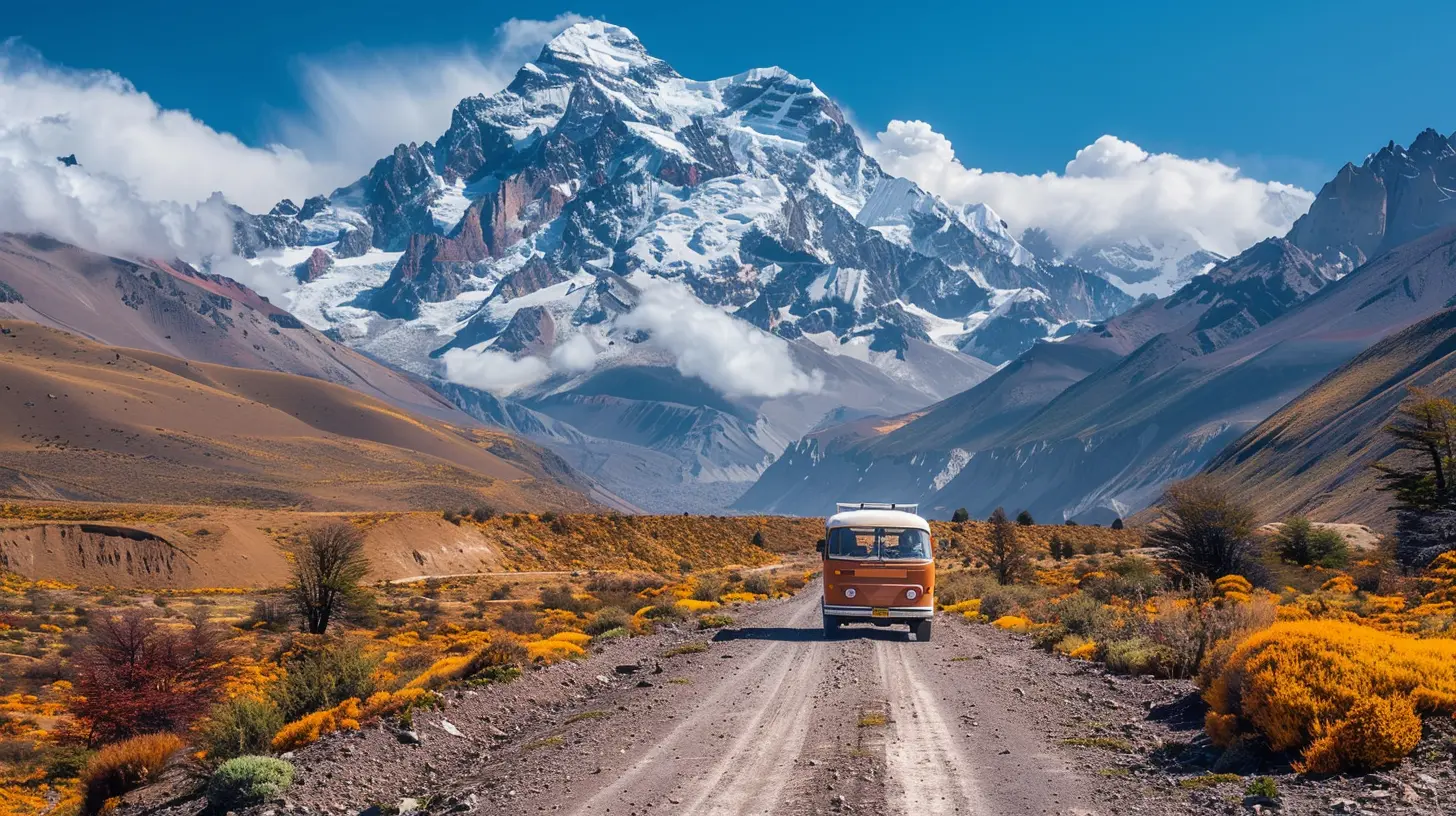
The standard argument for flying is time. On paper, a flight from Quito to Lima saves you two days. In practice, the calculation is messier. Airports in the Andes are often far from the city center, and mountain weather cancels or delays flights more often than coastal routes. Add transfers, security, and the odd overnight in an airport hotel, and the gap narrows considerably.There is also the acclimatization question. Flying from sea level to Cusco or La Paz puts you at 3,400 to 3,650 meters in a couple of hours, which is the fastest way to feel terrible. Going overland lets your body climb gradually. A route that takes you from Lima (sea level) up through Arequipa (2,300 meters) and then to Cusco gives your physiology days to adjust. This is not a minor detail. Altitude sickness ruins more Andean trips than any other single factor, and slow ascent is the most reliable prevention.
The third reason is simply that the routes are the destination. The Andes are not a backdrop you skip past. The bus window frames terraced valleys, glacier-fed rivers, and high-altitude puna where vicunas graze. Some of these stretches are among the most spectacular road journeys anywhere, and they cost the price of a ticket.
The Main Overland Corridors
The Panamericana and the Coastal Route
The Panamericana runs the length of the continent, and in Peru and Chile it mostly hugs the coast rather than the mountains. This is the fast, comfortable option: paved highway, frequent departures, large reclining-seat buses. It is not the scenic Andean route, but it is the practical backbone that connects the region. If you need to move efficiently between Lima, Arequipa, and northern Chile, this is how you do it.The trade-off is obvious. You get speed and reliability at the cost of the landscapes that make the Andes worth crossing. Use the coastal route when you are short on time or when you need a break from mountain roads. Use the interior routes when the journey itself matters.
The Andean Interior: Peru's Central Highlands
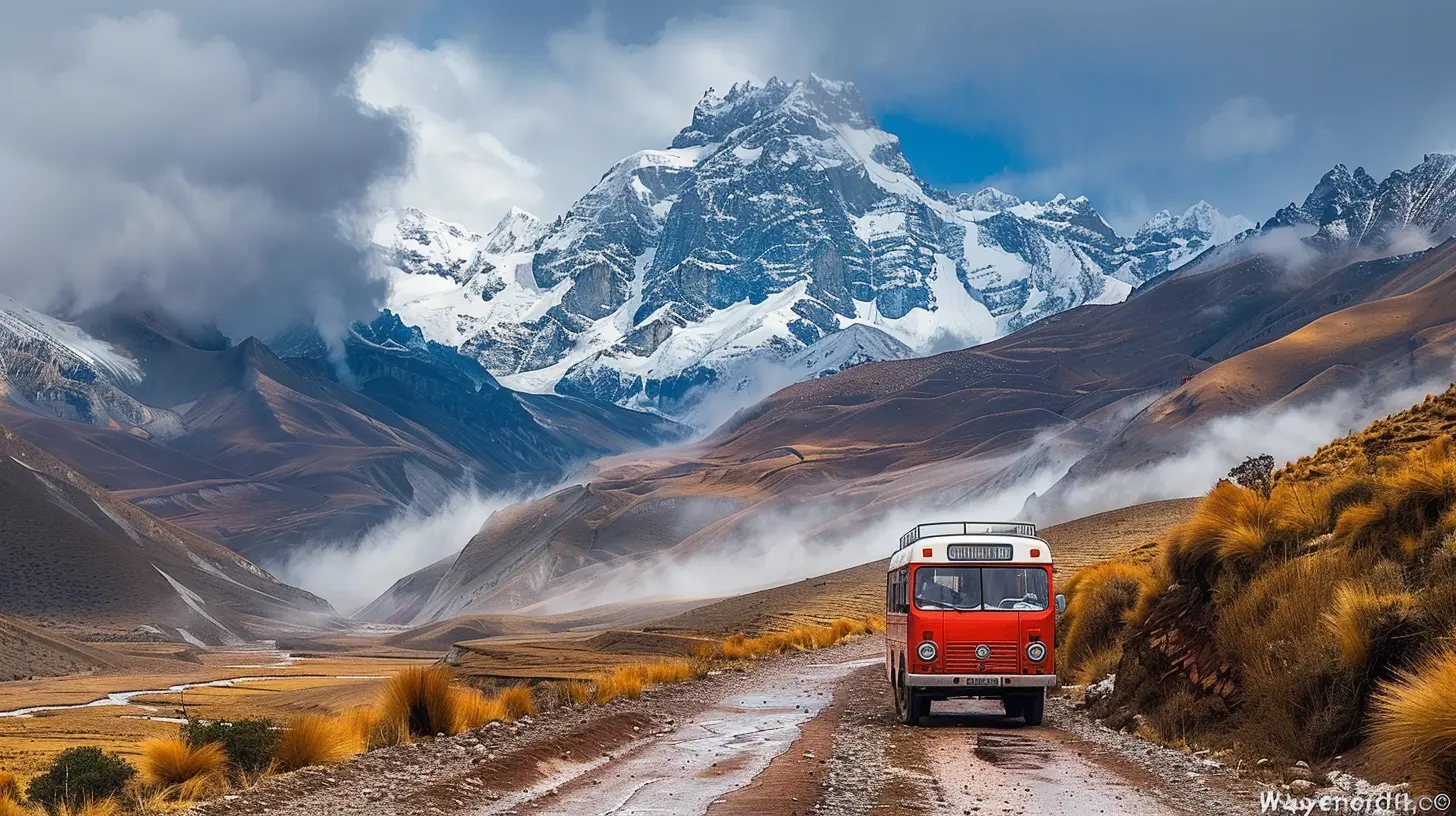
The classic route runs Lima to Huancayo to Ayacucho to Cusco, or Lima to Arequipa to Puno to Cusco. These roads climb into the Sierra and stay there. The Lima to Huancayo leg crosses Ticlio, a pass above 4,800 meters, and the descent into the Mantaro Valley is dramatic. Huancayo to Ayacucho is slower and rougher, with long stretches of high, empty country.The Arequipa to Puno route is the more popular choice, and for good reason. You cross the altiplano, pass volcanoes, and arrive at Lake Titicaca. Puno to Cusco is a full day through high country with stops in towns like Juliaca, which is chaotic but useful for connections.
Why this works: the altitude gain is gradual, the towns are interesting in themselves, and the bus network is dense. When it does not work: if you try to do Lima to Cusco in one push, you will arrive exhausted and unacclimatized. Break it up. Two or three days of staged travel is worth more than the time you save.
Bolivia: La Paz, the Altiplano, and the Salt Flats
Bolivia is where Andean bus travel gets genuinely adventurous. The road from Puno to Copacabana to La Paz crosses the Titicaca strait by ferry (a barge, really, with the bus on it) and then descends into the bowl where La Paz sits. The descent into the city at night, with the lights spilling down the canyon walls, is one of the great arrivals in South America.From La Paz, the route south to Uyuni and the salt flats is long and often rough. Overnight buses run between La Paz and Uyuni, and the quality varies enormously by operator. This is a route where paying for the better class of bus is not indulgence, it is common sense. The alternative, flying, misses the point entirely.
The Sucre to Potosi leg is shorter but higher and more historically layered. Potosi sits at over 4,000 meters and was once one of the richest cities in the world because of its silver mines. The bus between the two cities is a few hours, and the contrast between Sucre's mild colonial streets and Potosi's cold, windswept altitude is stark.
Chile and Argentina: The High Passes
The Andean crossings between Chile and Argentina are among the most spectacular in the world, and several are served by regular buses. The Cristo Redentor pass between Santiago and Mendoza is the busiest, with a tunnel at over 3,000 meters and a drive that can be closed by snow in winter. The Cardenal Samore pass further south connects Osorno and Bariloche through lake country and temperate forest.Further north, the route from San Pedro de Atacama in Chile to Salta or Jujuy in Argentina crosses high desert and salt flats. These crossings are seasonal in practice. Winter closures are common, and even in summer, weather can shut a pass for a day or two. Build slack into your schedule. If you have a flight out of Santiago three days after crossing from Mendoza, you are taking a real risk.
The key insight here is that Andean border crossings are not like European borders. They can close without much notice, and the bus companies will not rebook you on a flight. They will put you on the next bus, whenever that is. Plan for delays and you will rarely be disappointed.
Choosing an Operator: What Actually Matters
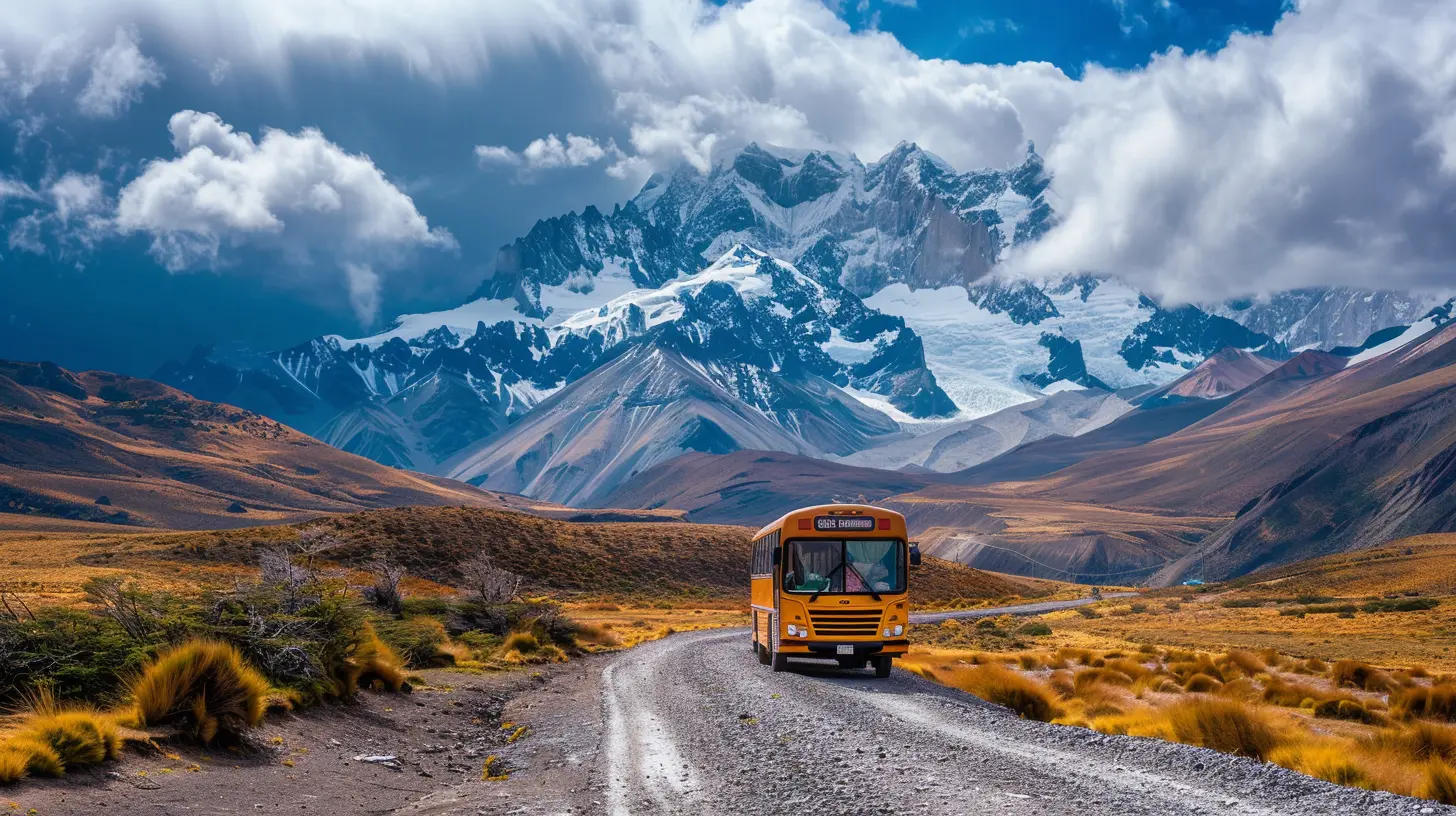
Bus quality in South America spans an enormous range, from double-decker sleepers with lie-flat seats and onboard meals to converted trucks with chickens on the roof. The price difference between the best and worst options on a given route is often smaller than you would expect, which means the cheap option is rarely the smart one on long-haul routes.Here is what to look at when comparing operators:
Seat class. Most long-distance companies offer multiple classes. "Cama" usually means a reclining seat, sometimes fully flat. "Semi-cama" is a partial recline. "Ejecutivo" varies by country but generally means the better bus. On overnight routes of ten hours or more, book cama or the equivalent. Your back will thank you.
Departure time. Overnight buses save a hotel night but cost you sleep if the road is rough. On very winding mountain routes, day buses are worth the extra night's accommodation because you actually see the scenery and arrive less wrecked. On long, straight altiplano runs, overnight is fine.
Reviews and recent reports. Bus companies change ownership and standards. A company that was excellent two years ago may have slipped. Check recent traveler reports rather than relying on outdated guides. Look specifically for comments about safety, punctuality, and whether the advertised seat class matched reality.
Terminal location. In some cities, the main bus terminal is far from the center or in a neighborhood you would not want to walk around at night. Factor in a taxi. In La Paz, the main terminal is reasonably central; in Lima, the terminals are scattered and you need to know which one your bus uses before you book.
A common mistake is booking the cheapest overnight bus to save money and then spending the next day recovering. The savings evaporate when you lose a day of your trip. Treat the bus as part of the experience and budget accordingly.
Border Crossings: The Practical Realities
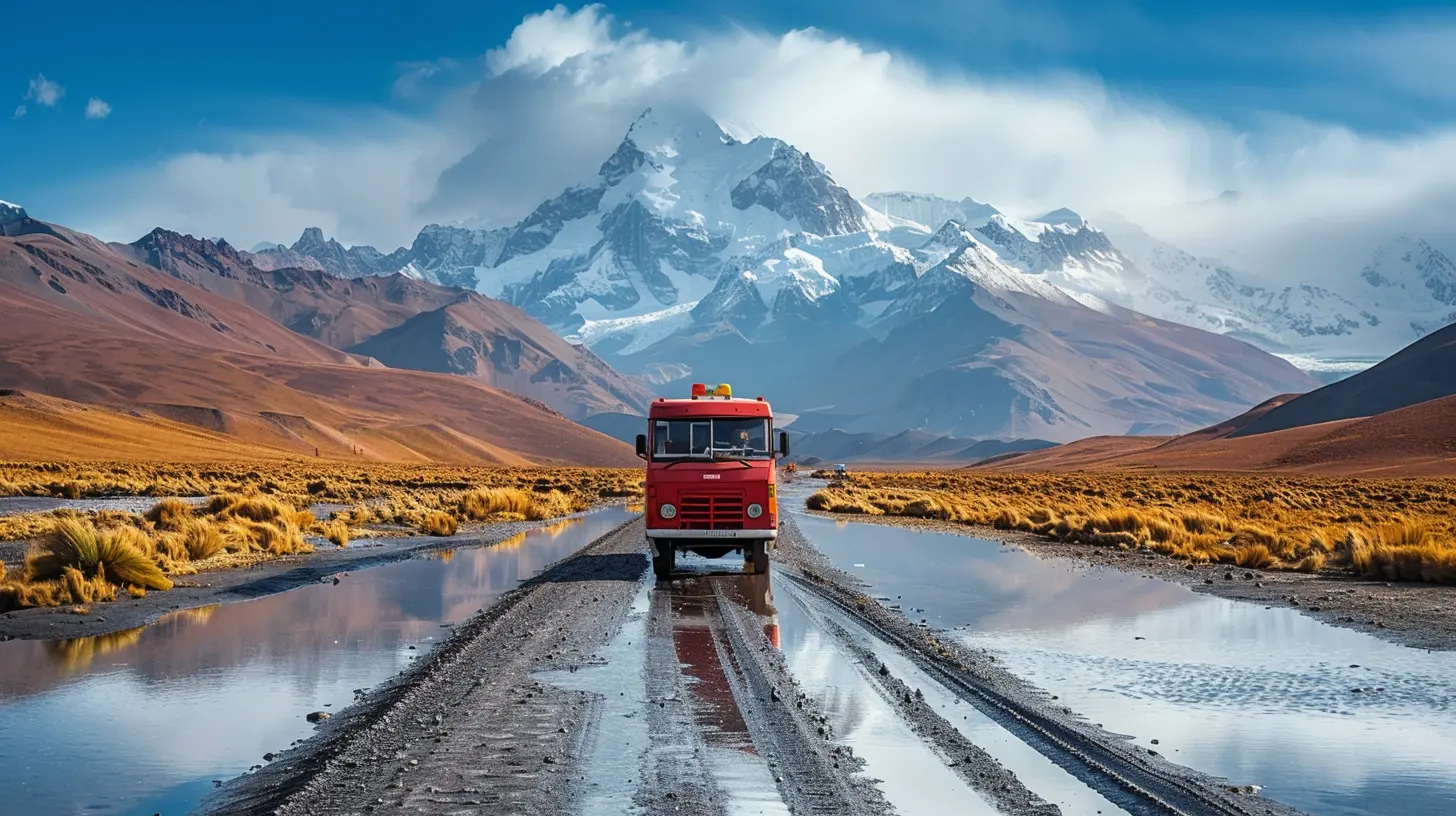
Andean border crossings range from efficient to chaotic, and the difference is usually about preparation rather than luck. A few principles hold across the region.First, know your entry requirements before you reach the border. Some countries require proof of onward travel, some require yellow fever vaccination certificates if you are arriving from certain areas, and visa rules differ by nationality. Check official government sources, not forum posts from five years ago.
Second, carry small denominations of local currency and US dollars. Border towns often have poor ATM access, and informal fees or transport costs can catch you out. Do not rely on card payment at a land border.
Third, expect the crossing to take longer than the bus company suggests. A crossing that "takes two hours" can take five if a shift change coincides with your arrival. If you are connecting to another bus on the other side, leave a generous buffer.
Fourth, keep your documents accessible. Passports, entry stamps, and any customs declarations should be in a pocket, not buried in a pack in the luggage hold. You will often need to retrieve your bag and carry it through customs yourself.
The Chile-Argentina crossings are generally well organized but weather-dependent. The Bolivia-Peru crossing at Desaguadero is busier and more informal. The Peru-Ecuador crossing at Huaquillas has a reputation for hassle, and it is worth reading current reports before you go. None of these are reasons to avoid overland travel, but they are reasons to arrive informed.
Altitude: The Factor That Shapes Everything
No discussion of Andean bus travel is complete without altitude, because it determines how you should structure your route and how you will feel while traveling it.The practical rules are simple. Ascend gradually where you can. Spend a night or two at intermediate altitudes before going high. Drink more water than you think you need. Avoid alcohol for the first days at altitude. And do not assume that fitness protects you. Fit people get altitude sickness too; the response is individual and not reliably predictable.
Bus travel interacts with altitude in specific ways. Long stretches above 4,000 meters, such as the route across the Bolivian altiplano or the Peruvian puna, can leave you feeling breathless and headachy even if you have acclimatized. This is normal. What is not normal is confusion, severe headache that does not respond to painkillers, or breathlessness at rest. Those are signs to descend, and the bus is actually an advantage here because it can take you down.
A common misconception is that coca tea prevents altitude sickness. It may ease symptoms slightly and it is culturally important, but it is not a preventative. The only reliable prevention is slow ascent. If you are sensitive to altitude, consider a prescription medication after consulting a doctor, and structure your route so that your highest points come after several days at moderate elevation.
Seasonality and Timing for 2027
Andean travel has two broad seasons, and the distinction matters more for some routes than others.The dry season, roughly May through September, brings clear skies, cold nights, and reliable roads in most of Peru, Bolivia, and northern Chile. This is the best window for high-altitude routes and for the salt flats, which can be impassable when wet. The trade-off is cold. Nights at altitude in June can drop well below freezing, and budget buses are not always well heated.
The wet season, roughly December through March, brings rain, cloud, and the risk of landslides on mountain roads. In Peru, the rainy season can close roads in the highlands for hours or days. In Bolivia, the salt flats flood, which is spectacular for photography but restricts access. In Chile and Argentina, the high passes can close with snow even in summer.
The shoulder months, April and October-November, often offer the best balance: decent weather, fewer crowds, and roads that are usually open. For a 2027 trip, the practical advice is to avoid the heart of the wet season for high-altitude routes and to build flexibility into any itinerary that depends on a specific border crossing.
One more timing note: local holidays and festivals can affect bus availability. Semana Santa in Peru and Bolivia, and Carnival in February, fill buses days in advance. If your travel coincides with a major festival, book early.
Route Recommendations by Travel Style
Different travelers want different things from an Andean bus trip, and the best route depends on which one you are.For the first-time Andean traveler: Lima to Arequipa to Puno to Cusco, all by bus, over about ten days. The altitude gain is gradual, the towns are worth several nights each, and the bus legs are manageable. This route gives you the highlights without the hardest roads.
For the scenery obsessive: La Paz to Uyuni to San Pedro de Atacama, then onward to Salta. This is high, remote, and visually extraordinary. It requires tolerance for rough roads and cold, but the landscapes are unmatched.
For the history and culture traveler: Quito to Cuenca to Loja in Ecuador, then across the border into northern Peru toward Chachapoyas and Cajamarca. This is a slower, less-touristed corridor with colonial cities, archaeological sites, and a bus network that rewards patience.
For the border-crossing enthusiast: Santiago to Mendoza over the Cristo Redentor, then north through Argentina to Salta and across to San Pedro de Atacama. This route combines two of the most dramatic Andean crossings with wine country and high desert.
Each of these routes can be done in either direction. Doing them north to south, for example, means a more gradual altitude gain in some cases and a more gradual descent in others. Consider which direction gives your body the gentler introduction.
Money, Tickets, and Booking in Practice
Booking has moved online across much of the region, but not uniformly. In Peru and Chile, you can often book directly with the operator or through a reputable aggregator. In Bolivia, online booking is less reliable and you may need to buy at the terminal or through a local agency.Pay attention to the currency and the payment method. Some operators price in local currency, some in US dollars. Foreign cards sometimes fail, so carry a backup. Keep your booking confirmation accessible offline, because terminal wifi is not guaranteed.
Budget realistically. The bus fare is only part of the cost. Add terminal taxis, meals, and the occasional unplanned overnight when a road closes. On a two-week Andean overland trip, a contingency fund of a few hundred dollars covers most surprises.
A final practical note: luggage. Buses generally allow one large bag in the hold and one small bag with you. Valuables should stay with you. On some routes, luggage is weighed or charged by volume, so pack accordingly. And label your bag. Bags do get mixed up, and a name tag resolves most of those problems quickly.
The Case for Slowness
The Andes by bus is not the fastest way to see South America. It is the way that shows you how the continent fits together: the climb from coast to puna, the shift from Spanish colonial towns to Aymara and Quechua communities, the way the weather changes as you gain elevation. You will spend hours watching the landscape change through a window, and those hours are not wasted. They are the trip.Plan for 2027 with realistic expectations about time, weather, and altitude. Choose routes that match your tolerance for rough roads and cold nights. Book the better bus when the difference matters. Build in slack for border crossings and closed passes. Do those things, and the Andes by bus will be the part of your trip you remember most clearly.
all images in this post were generated using AI tools
Category:
Iconic RoutesAuthor:

Reed McFadden