Sunset Spots You Can't Miss During Your 2026 Road Trip
24 September 2026
A road trip is a series of small decisions that add up to one big memory. Where you sleep, what you eat, which detour you take. But there is one decision that shapes how you remember an entire day on the road: where you park yourself when the light starts to drop. Sunset is the payoff. It is also the part of the day most travelers get wrong, because they treat it as an afterthought rather than a plan.
This guide is about getting that plan right. Not a list of pretty places copied from a thousand other lists, but a working framework for finding, timing, and enjoying sunsets on a long drive in 2026. I have spent enough evenings chasing the last light to know that the difference between a forgettable sunset and one you will still talk about years later usually comes down to preparation, not luck.
Why Sunset Matters More Than You Think on a Road Trip
Most people photograph the same handful of landmarks during the day. Sunset is different. It changes the way a place looks and the way you feel about it. Long shadows add depth to flat landscapes. Warm light flatters everything from a desert mesa to a city skyline. And the crowd thins out as casual visitors head back to their hotels, which means the best light often arrives when the place is quietest.There is also a practical reason to build your day around sunset. It gives your driving a natural rhythm. You cover ground in the morning and early afternoon, then slow down as the light softens. That rhythm keeps you from overdriving, which is the single most common mistake on long road trips. If you know you want to be somewhere specific an hour before sundown, you stop cramming too much into the day.
One caution before we go further. Sunset is not a single moment. It is a process that runs roughly from the start of golden hour, through the actual drop below the horizon, into civil twilight and sometimes blue hour afterward. The best shows often happen in the twenty minutes after the sun disappears, when the sky lights up with color that was not there a moment before. Plan for the whole window, not just the peak.
The Science of a Good Sunset, in Plain Terms
You do not need a meteorology degree, but understanding a few basics will help you pick better spots and better nights.A sunset needs two ingredients to be memorable: clean air near the horizon and something for the light to bounce off. High, thin clouds are ideal. They catch the low sun and spread color across the sky. Low, thick clouds are the enemy. They block the light and turn everything gray. Haze, smoke, and dust can go either way. A little haze can deepen reds and oranges. Too much and the whole sky turns into a flat brown smear.
Here is the part most people miss. The quality of a sunset is often decided by what is happening hundreds of miles away. Weather systems, wildfire smoke, and even volcanic particles in the upper atmosphere can travel enormous distances and change the color of the sky you see. That means a forecast of "clear skies" is not automatically good news. Perfectly clear skies often produce a short, pale sunset with little drama. Some cloud cover is usually better.
For planning, I rely on three things. First, a weather app that shows cloud cover at different altitudes, not just a single percentage. Second, a sun position tool that tells me the exact azimuth and elevation of the sun at my location. Third, my own eyes on the horizon about an hour before sundown. If you can see a band of clear sky under a layer of high clouds, you are in for a good one.
Timing Is Everything: Golden Hour, Blue Hour, and the Gap Between
Golden hour is the period of warm, soft light that begins roughly an hour before sunset, though the exact length depends on your latitude and the season. Near the equator it is short. In higher latitudes during summer, it can stretch for two hours or more. This is the window for portraits, landscapes, and any photograph where you want flattering light.The actual sunset is the moment the upper edge of the sun dips below the horizon. This is not usually the most colorful part. It is the turning point.
Civil twilight follows, lasting around twenty to thirty minutes depending on where you are. This is when the sky can explode with color. Many photographers consider this the real show, and they are usually right.
Blue hour comes after that, when the sky turns deep blue and city lights start to glow. It is a different mood entirely, calmer and cooler, and it is excellent for urban scenes.
The practical takeaway is simple. Arrive at least an hour before sunset. Stay at least thirty minutes after. If you only show up for the five minutes around the actual drop, you are watching the least interesting part of the performance.
How to Choose a Sunset Spot Anywhere in the World
You do not need a guidebook to find a great sunset spot. You need a method.Start with direction. The sun sets in the west, but not exactly west. It moves along the horizon through the year, swinging north in summer and south in winter in the northern hemisphere. In the southern hemisphere it is reversed. So the first question is: which way does the sun actually set on the day I am there? A spot with a perfect western view in June might have an obstructed view in December. Check the azimuth before you commit.
Next, look for elevation. A hill, a dune, a rooftop, a bridge, or a cliff gives you a clear line of sight to the horizon and lets you see the color spread across a wider area. Flat ground at sea level can still work, but you are more dependent on the sky directly above you.
Then look for foreground. A sunset is more interesting when there is something between you and the sun. A silhouette of trees, a pier, a rock formation, a city skyline. These elements give the light something to interact with and give your photos a sense of scale.
Finally, consider access and safety. A remote viewpoint with a rough access road is not worth it if you are driving back in the dark on unfamiliar terrain. Ask yourself: can I get out of here safely after blue hour? If the answer is no, find another spot.
Coastal Sunsets: The Reliable Choice
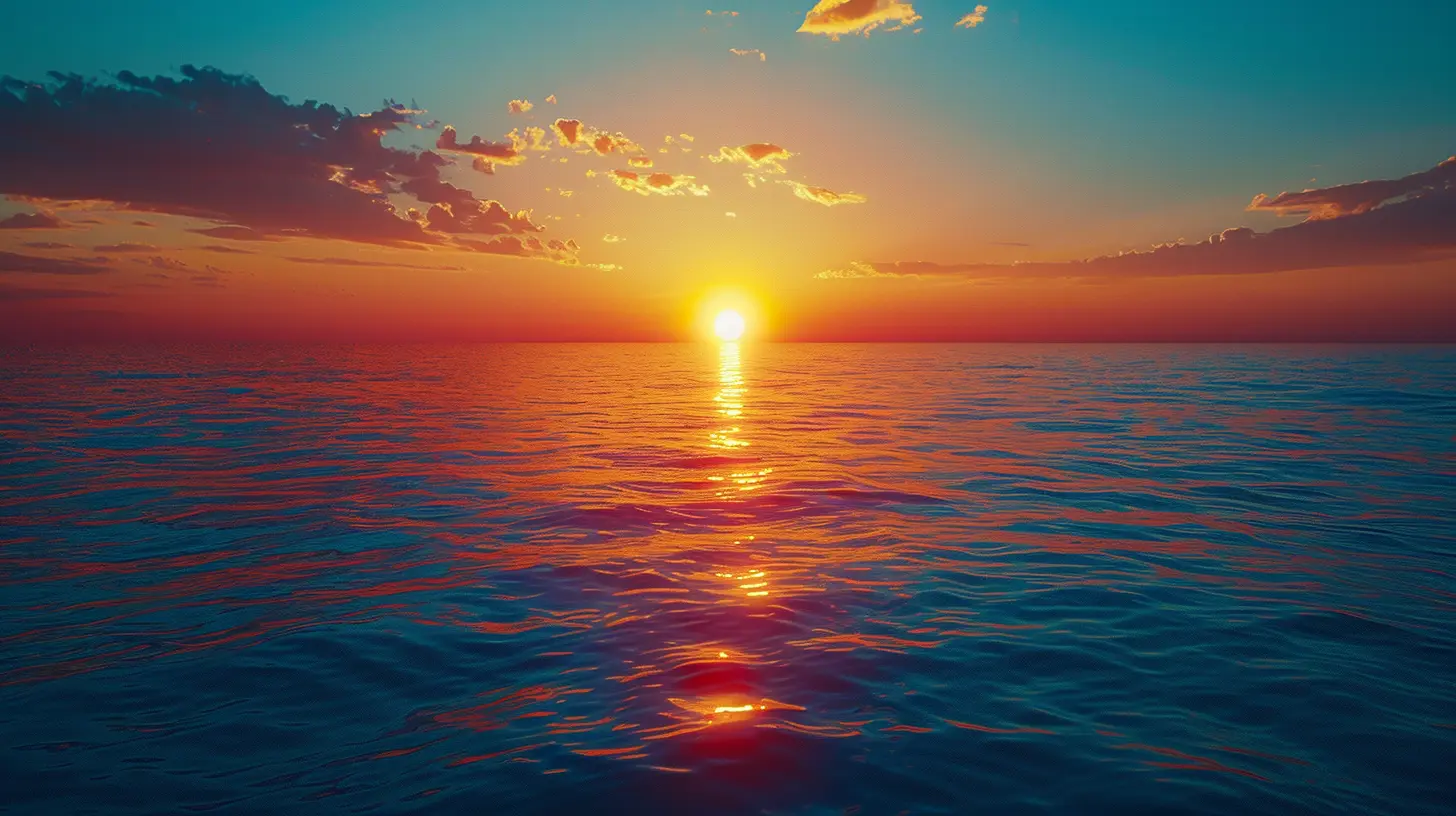
The ocean is the most forgiving sunset backdrop in the world. When the sun drops into open water, you get an unobstructed horizon and a mirror below it. Even a mediocre sky looks good over the sea.The trade-off is crowds and weather. Popular coastal viewpoints fill up fast, especially in summer, and marine layer clouds can kill an otherwise perfect evening. Coastal fog is a real risk in many regions, particularly in summer. If you are near a coast, check the fog forecast, not just the general weather.
A useful trick is to move slightly inland or to a higher point above the fog line. Many coastal hills sit above the marine layer, giving you a view over a sea of clouds with the sun setting into it. This is one of the most dramatic sights in nature, and it is available to anyone willing to drive twenty minutes uphill.
Desert and Canyon Sunsets: Big Sky, Big Color
Deserts and canyons produce some of the most intense sunsets on earth. The dry air lets light travel farther without scattering, and the rock formations reflect warm tones back into the sky. The result is often a deep, saturated color that lasts longer than a coastal sunset.The catch is that deserts cool down fast after sundown. A day that felt hot at four in the afternoon can feel cold by eight. Bring a layer. Also bring water, even for a short walk to a viewpoint. And be honest about your navigation skills. Desert roads and trails can be hard to follow in the dark.
Canyons have their own logic. The best view is usually from the rim, not the floor, because the floor loses the light early. If you are inside a canyon at sunset, you may see the walls glow while the sky above stays flat. That can be beautiful, but it is a different experience. Decide which one you want before you commit to a location.
Mountain and Lake Sunsets: Reflections and Drama
Mountains add vertical drama to a sunset. The sun disappears behind a ridge, and the sky above the ridge can light up in ways that flat landscapes cannot match. The trade-off is that mountains also block the light. A peak that looks perfect on a map might put you in shadow an hour before the sun actually sets.Lakes solve this problem. A lake gives you an open horizon in one direction and a mountain backdrop in another, plus a reflection that doubles the color. Alpine lakes at high elevation are especially good because the air is thin and clear. Just remember that mountain weather changes fast. A calm evening can turn windy and cold within minutes. Check the forecast and carry wind protection.
Urban Sunsets: Rooftops, Bridges, and Waterfronts
Cities are underrated for sunsets. A skyline silhouetted against a glowing sky is a classic image for a reason, and urban spots are often easier to reach than remote ones. Rooftop bars, bridges, waterfront parks, and parking garages with a view can all work.The challenge is clutter. Power lines, buildings, and signage can ruin a clean composition. Scout your spot during the day so you know what is in the frame. And check opening hours. A rooftop that is open at noon may be closed or reserved in the evening.
Urban sunsets also benefit from the blue hour that follows. City lights coming on against a deep blue sky is one of the most reliable photographic scenes you can find. Plan to stay longer than you think.
Common Mistakes That Ruin a Sunset
The biggest mistake is arriving late. If you pull up as the sun touches the horizon, you have already missed the best light. Give yourself an hour.The second mistake is choosing a spot with no foreground. A bare sky, no matter how colorful, is less interesting than a sky with something in front of it.
The third mistake is ignoring the exit plan. The most beautiful viewpoint in the world becomes a problem if you have to drive an hour on dark, winding roads to get back to your hotel. Scout the route in daylight.
The fourth mistake is over-planning. Some of the best sunsets happen when you pull over on a whim because the sky looks promising. Leave room in your schedule for spontaneity.
The fifth mistake is chasing someone else's photo. A spot that worked for another traveler on another day may not work for you. Conditions change. Trust your own eyes and your own plan.
A Practical Checklist for Every Sunset Stop
Before you leave for the evening, run through this list.Check the sunset time and azimuth for your exact location. Confirm cloud cover at multiple altitudes. Identify your viewpoint and a backup. Pack a layer, water, and a headlamp. Charge your phone and camera. Know your route back in the dark. Arrive an hour early. Stay thirty minutes late.
That is it. Nothing complicated, but each item matters.
Final Thoughts
A great sunset on a road trip is not an accident. It is the result of a few small choices made earlier in the day. You pick a direction. You pick a time. You pick a spot with something interesting in the frame. Then you wait.The waiting is part of it. Sunset rewards patience in a way that few other travel experiences do. You cannot rush it, and you cannot fake it. You just have to be there, in the right place, at the right time, ready to watch.
In 2026, with better forecasting tools and more accessible viewpoints than ever, there is no excuse to miss it. Plan your evenings as carefully as you plan your driving days, and you will come home with more than photos. You will come home with the kind of memories that make a road trip worth taking in the first place.
all images in this post were generated using AI tools
Category:
Sunset SpotsAuthor:

Reed McFadden