Sunset Destinations that Are Perfect for Solo Travelers in 2026
13 October 2026
Solo travel has quietly become one of the most durable trends in global tourism. What was once framed as a niche pursuit for backpackers or the recently single is now a mainstream choice for people of all ages, budgets, and temperaments. Within that broader shift, a smaller subcategory has emerged: travelers who plan entire trips around sunsets. Not just any sunset, but the kind that makes you put your phone down, sit still, and feel the day end properly.
This article is about those places. It is also about the practical realities of experiencing them alone, which differ from traveling with a partner, a friend group, or a tour. A sunset is a shared event in most cultures, and being by yourself at one can feel either liberating or awkward depending on where you are, how you got there, and what happens after the light fades. The destinations below were chosen with that full picture in mind, not just the view.
Why Sunset Travel Suits Solo Travelers So Well
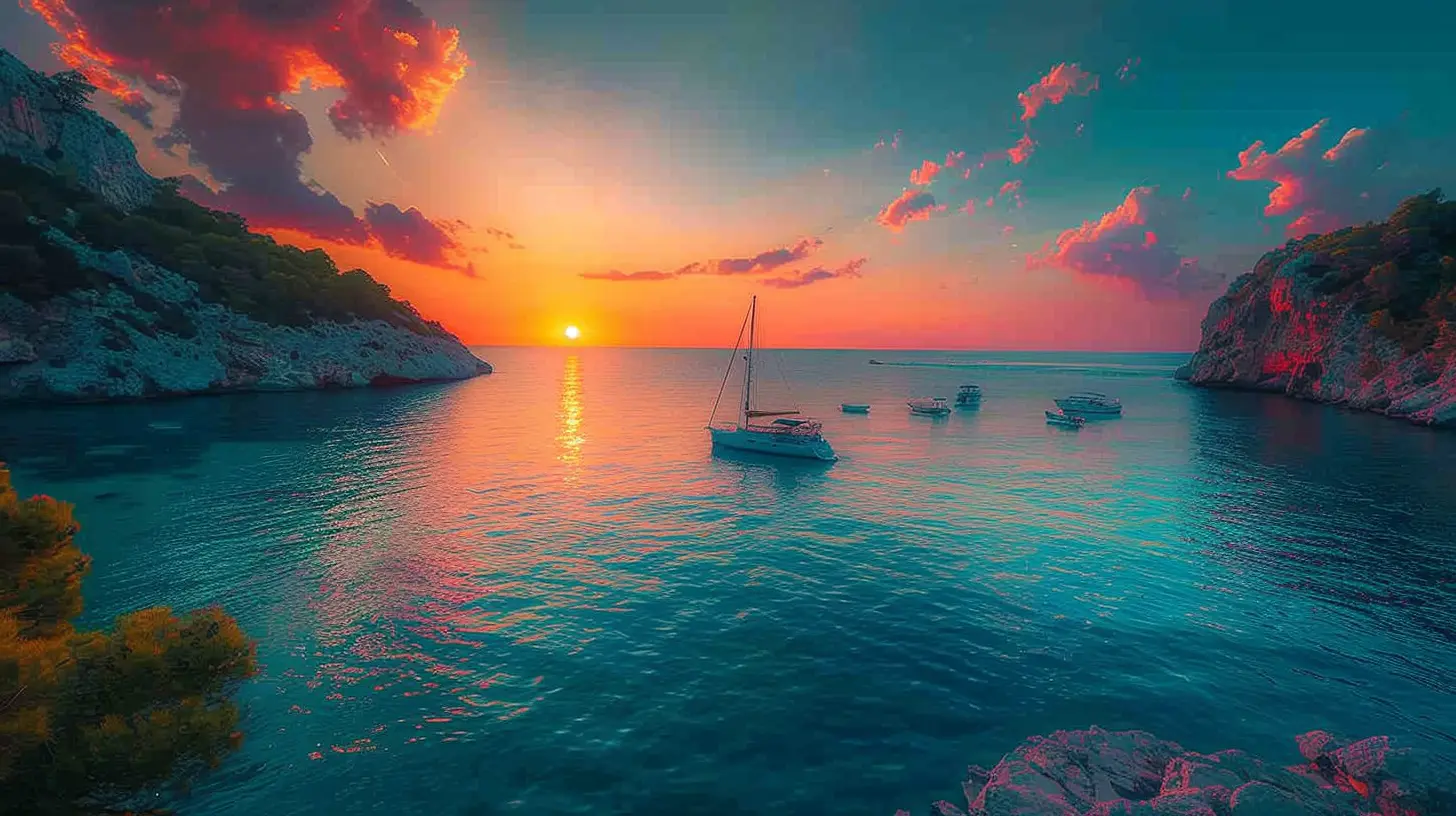
Sunset is a natural anchor for a solo day. It gives structure without demanding a schedule. You can spend the morning however you like, eat when you are hungry, and still have a fixed point in the late afternoon that pulls the day toward a satisfying close. For solo travelers, who often have to manufacture their own rhythm, that anchor matters more than it does for groups.There is also a social dimension that many people miss. Sunset viewpoints tend to be informal gathering places. Strangers stand side by side, cameras out, and small conversations start easily because everyone is looking at the same thing. It is one of the few travel contexts where being alone does not read as being isolated. You can talk or not talk, and either choice is socially acceptable.
The third reason is safety. Sunset happens at a predictable time, in a predictable direction, and usually in places that are well known. That predictability lets you plan your exit before dark, which is one of the most important habits for solo travelers. You are not wandering a strange city at midnight. You are watching a natural event end and then heading somewhere you already scouted.
What to Evaluate Before You Book
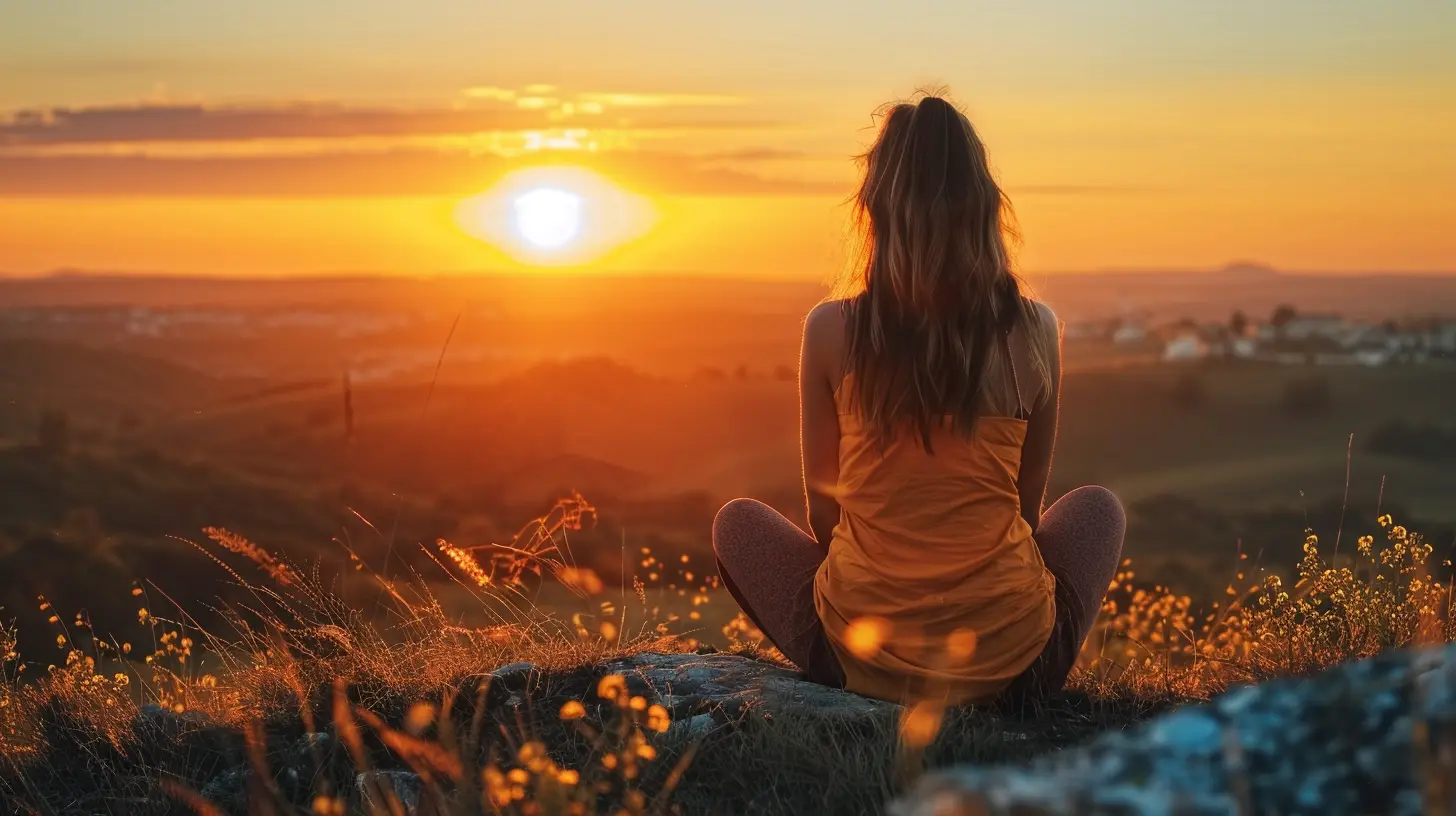
Before getting into specific places, it helps to understand the criteria that actually determine whether a sunset destination works for a solo traveler. These are the questions worth asking about any location you are considering.Safety After Dark
The sunset is the easy part. The fifteen minutes after it are the hard part. Ask yourself: Is the walk back to my accommodation lit and populated? Is there a reliable taxi or rideshare option, or will I be standing on a road hoping something comes? Does the area empty out immediately once the sun is gone, or does it transition into a dinner and evening scene?Destinations where the sunset spot flows naturally into a restaurant strip, a promenade, or a town square are far better for solo travelers than isolated cliffs or remote beaches with no infrastructure.
Ease of Access Without a Car
Many of the world's best sunset views are reachable only by private vehicle. That is fine if you are comfortable driving abroad, but it adds cost and risk. Places with public transport, walkable viewpoints, or organized shuttles make solo travel simpler and often cheaper, since you are not paying for a rental car alone.The Solo Dining Question
Sunset and dinner pair naturally, but not every destination makes solo dining comfortable. In some cultures, eating alone in a restaurant is unremarkable. In others, it draws attention. Destinations with strong street food scenes, counter seating, or casual tavernas tend to be easier. If you are someone who finds solo restaurant meals draining, factor that into your choice.Season and Weather Reality
A sunset destination is only as good as its cloud cover. Coastal locations in monsoon season, mountain areas in summer haze, and desert spots during dust storms can all deliver disappointing evenings. Check historical weather patterns for your specific travel month, not just the destination's reputation. A place famous for sunsets can be genuinely poor for weeks at a time.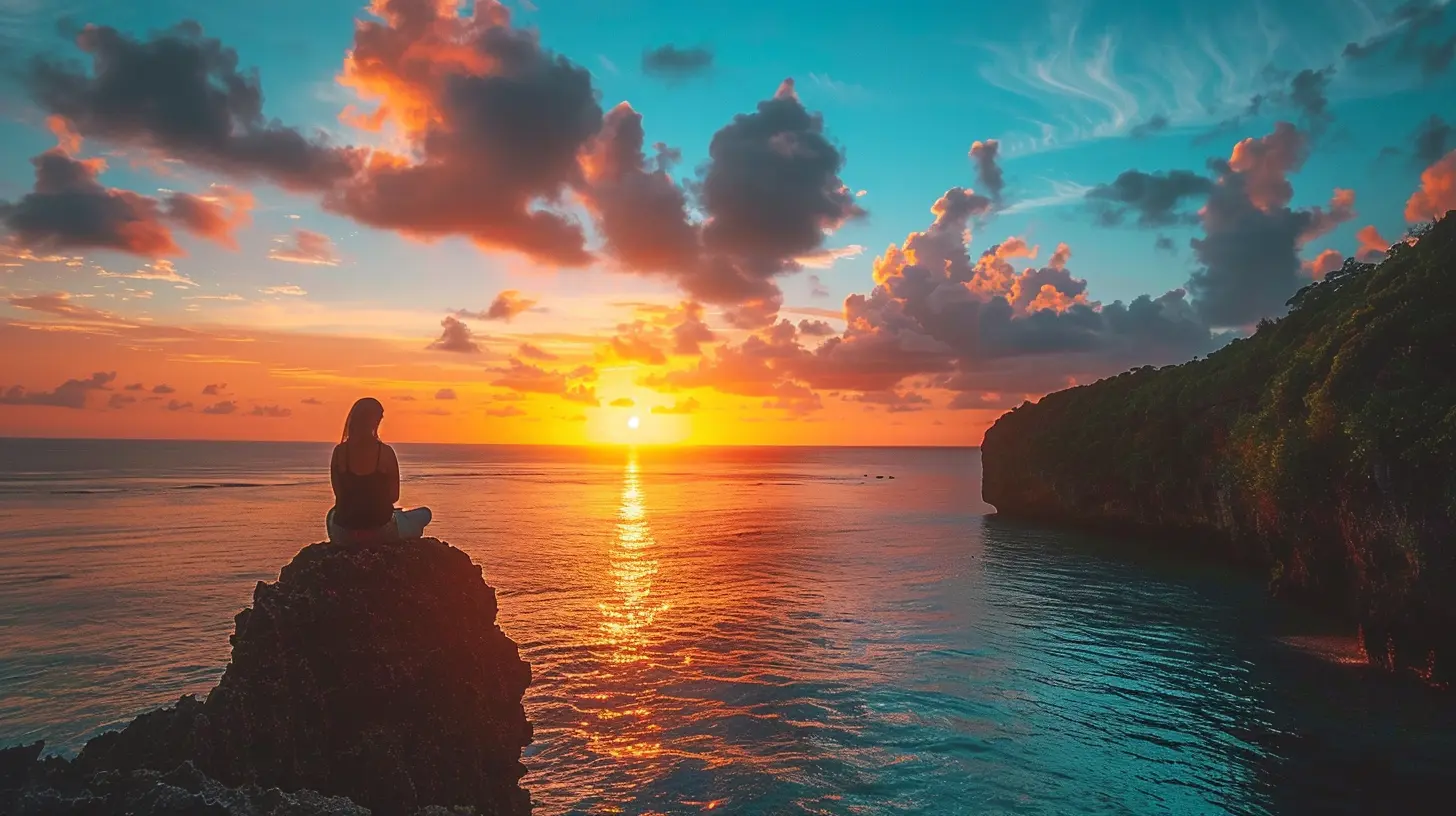
Santorini, Greece: The Classic, With Caveats
Santorini is the most photographed sunset destination in the world, and the images are not misleading. The caldera view from Oia is genuinely extraordinary. But the solo traveler needs to understand what they are walking into.Oia's sunset is a crowd event. In peak season, thousands of people line the narrow streets and terraces, and the famous blue domes are surrounded by selfie sticks. For some solo travelers, this is fine and even fun. For others, it is the opposite of what they came for.
The better strategy is to skip Oia at sunset and go to Imerovigli instead. It sits higher on the caldera, the crowds are thinner, and the view is arguably better because you see more of the coastline. Alternatively, book a caldera-view hotel with a private terrace and watch from there. This costs more, but it solves the crowd problem entirely and gives you a safe, comfortable place to be alone.
Santorini works well for solo travelers because it is safe, walkable in the main villages, and has a mature tourism infrastructure. Buses run between Fira, Imerovigli, and Oia, though they get crowded at sunset. The main drawback is cost. Accommodation and food are expensive, and solo travelers pay the same rates as couples without splitting anything. If budget matters, Santorini is a stretch.
Cape Town, South Africa: Variety and Value
Cape Town offers something rare: multiple world-class sunset locations within a single metro area, each with a different character. Signal Hill gives you a sweeping view over the city and Table Bay. Camps Bay delivers an ocean sunset with a beachfront promenade that stays lively into the evening. Chapman's Peak Drive, further south, is one of the most dramatic coastal roads anywhere, and the pull-offs along it are made for stopping.For solo travelers, Cape Town's advantage is that these spots are not isolated. Camps Bay in particular has restaurants, bars, and a busy promenade, so you can watch the sun go down and then walk directly into dinner without a sketchy transition. Rideshare coverage is good, though surge pricing at sunset is common.
The trade-off is safety awareness. Cape Town is a city with significant inequality and crime, and solo travelers need to be thoughtful about where they go and when. Stick to well-trafficked areas, avoid walking alone after dark in unfamiliar neighborhoods, and use rideshares rather than walking long distances at night. Done sensibly, Cape Town is one of the best value sunset destinations in the world.
Uvita, Costa Rica: The Whale Tail and the Jungle Backdrop
Costa Rica's Pacific coast has no shortage of sunset spots, but Uvita stands out because of the Marino Ballena National Park, where a natural sandbar forms a whale tail shape at low tide. Watching the sun drop into the Pacific from that sandbar, with jungle-covered mountains behind you, is a genuinely memorable experience.The solo travel case here is strong for a few reasons. Uvita is small and relaxed. Accommodation ranges from hostels to mid-range eco-lodges, so budgets are flexible. The national park has a small entrance fee and clear closing times, which means you are not the only person leaving when the sun goes down. And the town has a growing cafe and restaurant scene where eating alone is completely normal.
The drawback is transport. Costa Rica's public buses are slow and infrequent, and many travelers rent a car. Without one, you are relying on shuttles, taxis, or tours, which adds cost. The rainy season, roughly May through November, can also wash out sunsets for days at a time. The dry season from December to April is more reliable.
Ait Ben Haddou, Morocco: Desert Light and Ancient Walls
The fortified village of Ait Ben Haddou, a UNESCO World Heritage site on the old caravan route between the Sahara and Marrakech, is one of the most striking places in North Africa to watch the sun set. The earthen walls turn from gold to deep orange as the light drops, and the surrounding desert and riverbed frame the whole scene.For solo travelers, the appeal is the scale. This is not a crowded viewpoint. It is a small village with a handful of guesthouses, and evenings are quiet. You can climb to the top of the ksar for the view, then walk back down to your riad for dinner. The pace is slow and the atmosphere is calm.
Practical considerations matter here. Ait Ben Haddou is reached by road from Marrakech or Ouarzazate, and most travelers arrive by shared grand taxi, private driver, or organized tour. Public transport exists but is not convenient. Once there, accommodation is limited, so booking ahead is wise. As a solo traveler, particularly a woman traveling alone, it helps to arrange your transport and lodging in advance and to be clear with drivers about timing. Morocco is generally welcoming to solo visitors, but rural areas require more planning than cities.
Tromso, Norway: The Midnight Sun and the Polar Night
Tromso is not a sunset destination in the traditional sense, and that is exactly why it belongs here. In summer, the sun does not set at all, and the long golden hours stretch past midnight. In winter, the sun barely rises, and the sky turns pink and blue for a few hours in the middle of the day. Both are extraordinary, and both suit solo travelers who want something other than a beach sunset.The midnight sun in particular is worth planning around. Because the light never fully leaves, you can hike, kayak, or simply sit by the water at 11 p.m. in bright conditions. Tromso is a small, safe city with excellent public transport and a strong solo travel infrastructure, including organized tours for northern lights and fjord excursions where joining a group is easy and natural.
The trade-offs are cost and weather. Norway is expensive, and Tromso is no exception. Winter is cold, dark, and can be cloudy for days, which affects aurora viewing. Summer is milder but still unpredictable. If your goal is specifically a sunset, Tromso is the wrong choice. If your goal is the experience of light itself, it is one of the most rewarding places you can go alone.
Lisbon, Portugal: Urban Sunsets With Real Infrastructure
Lisbon has become one of Europe's most popular solo travel cities, and its sunset scene is a big part of why. The city is built on hills facing the Tagus River, which means west-facing viewpoints are everywhere. Miradouro da Senhora do Monte, Miradouro de Santa Luzia, and the area around the Cristo Rei statue all deliver strong sunsets over the water.What makes Lisbon work for solo travelers is the surrounding ecosystem. Each viewpoint sits in a neighborhood with bars, restaurants, and transit. You are never stranded. The city is walkable, the metro and trams are reliable, and English is widely spoken. Hostels and guesthouses cater to solo travelers, and the digital nomad presence means there are plenty of casual social opportunities if you want them.
The downside is crowds. Lisbon's popular miradouros fill up at sunset, especially in summer, and the atmosphere can be more party than peaceful. If you want solitude, go in the shoulder seasons of April, May, September, or October, or seek out the lesser-known viewpoints in neighborhoods like Graca or Penha de Franca.
Hoi An, Vietnam: River Sunsets and Lantern Light
Hoi An's sunset happens over the Thu Bon River, and the timing is almost perfect. The sun goes down, the sky turns orange, and then the town's lanterns come on, transforming the riverside into a warm, glowing scene. It is one of the few places where the transition from sunset to evening is as beautiful as the sunset itself.For solo travelers, Hoi An is easy. It is small, safe, and cheap. Guesthouses and hostels are plentiful and affordable. Street food is excellent and solo-friendly. Bicycles can be rented for a dollar or two a day, which makes getting to riverside spots simple. And because Hoi An is a major stop on the Southeast Asia backpacking route, meeting other travelers is effortless if you want company.
The main caution is seasonal. Hoi An's weather is split between a dry season from February to August and a wet season from September to January. The wet season can bring flooding, which occasionally closes streets and disrupts travel. Sunset quality also varies with the monsoon. Plan around the dry months for the best odds.
Oia Versus Imerovigli: A Comparison Worth Making
Since Santorini comes up so often in sunset conversations, it is worth comparing its two main caldera viewpoints directly, because the choice affects the solo experience significantly.Oia has the iconic view and the famous blue domes. It also has the largest crowds, the highest prices, and the most pressure to arrive hours early to claim a spot. For solo travelers who want the postcard photo, it is worth doing once. For those who want to actually enjoy the sunset, it is often a disappointment.
Imerovigli sits higher and further north. The view is wider, the crowds are smaller, and the village is quieter. It is also closer to Fira, which makes it easier to reach by bus or on foot along the caldera path. For a solo traveler prioritizing calm and safety, Imerovigli is usually the better base, with Oia as a day trip rather than a sunset destination.
Common Mistakes Solo Travelers Make at Sunset
Even experienced travelers fall into predictable traps. Knowing them in advance saves a lot of frustration.The first mistake is not scouting the route back in daylight. Arriving at a viewpoint is easy. Leaving it in the dark is where problems start. Walk the route earlier in the day, note where the lights are, and identify a backup plan if the path is unlit.
The second is underestimating how fast the light goes. The window between golden hour and full darkness is short, often under thirty minutes. If you plan to hike back or catch a bus, you need to leave before the color fades, not after.
The third is overcommitting to a single famous spot. The most photographed sunset viewpoint is often the most crowded and the least enjoyable. A slightly less famous alternative a few hundred meters away frequently delivers a better experience with a fraction of the people.
The fourth is ignoring weather forecasts. Cloud cover, haze, and wind all affect sunset quality. Checking the forecast the morning of can save you a wasted evening.
The fifth is forgetting that sunset happens earlier than you think in winter and in the tropics. In many destinations near the equator, the sun sets around 6 p.m. year-round with little twilight. In northern latitudes in winter, it can be gone by 4 p.m. Plan your day around the actual time, not a vague assumption.
Practical Tips for Planning a Sunset-Focused Solo Trip
A few habits make sunset travel smoother and safer.Build your day backward from sunset. Decide where you will be for the main event, then plan your afternoon around being nearby, rested, and not rushed. This avoids the classic mistake of trying to cram too much into the hours before.
Carry a small headlamp or use your phone's light for the walk back. It sounds obvious, but many people forget, and unlit paths are common at coastal and mountain viewpoints.
Eat before or after, not during. Sunset is not a good time to be managing a restaurant reservation. Have a late lunch, watch the sunset, then eat dinner afterward when the crowds have dispersed.
Consider joining a small group tour for at least one sunset. It solves transport, safety, and the social question all at once. Many destinations offer sunset-specific tours, from sailing trips to photography walks. They are often reasonably priced and a good way to meet people without committing to a full day of group travel.
Keep a backup plan for cloudy evenings. A museum, a cooking class, a spa, or a long dinner can turn a washed-out sunset into a good night. Flexibility is the difference between a disappointing trip and a resilient one.
Final Thoughts
The best sunset destination for a solo traveler is not the one with the most dramatic view. It is the one where you feel comfortable, safe, and free to enjoy the moment on your own terms. That might mean a crowded Greek island terrace, a quiet Moroccan hillside, or a Norwegian waterfront at midnight. The view is only part of the experience. The context around it, the ease of getting there, the walk back, and the dinner afterward, is what determines whether the evening stays with you.Choose a place that matches your tolerance for crowds, your budget, and your comfort with being alone in public. Then give yourself permission to do nothing but watch. That is the whole point.
all images in this post were generated using AI tools
Category:
Sunset SpotsAuthor:

Reed McFadden