Best Lakes for Reflective Sunset Views in 2026
12 October 2026
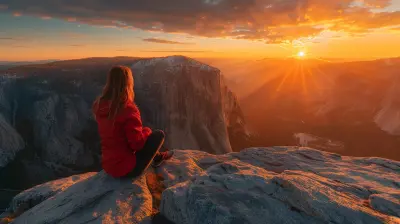
There is a specific moment that photographers chase and travelers remember. The wind dies. The surface of a lake turns to glass. The sun drops toward the ridgeline, and suddenly the water holds a second sky, a mirror image so complete that the horizon line blurs and you cannot tell where the mountains end and the reflection begins. That is the payoff. It is also, more often than not, the result of planning rather than luck.
This guide is about that moment. Not just where to go, but why certain lakes reflect sunsets better than others, how to time a visit, what gear actually matters, and which common assumptions lead people to the wrong shore on the wrong evening. If you have ever stood at a famous viewpoint and watched a flat, gray sheet of water swallow a perfectly good sunset, you already understand the problem this article solves.
Why Some Lakes Mirror the Sky and Others Do Not
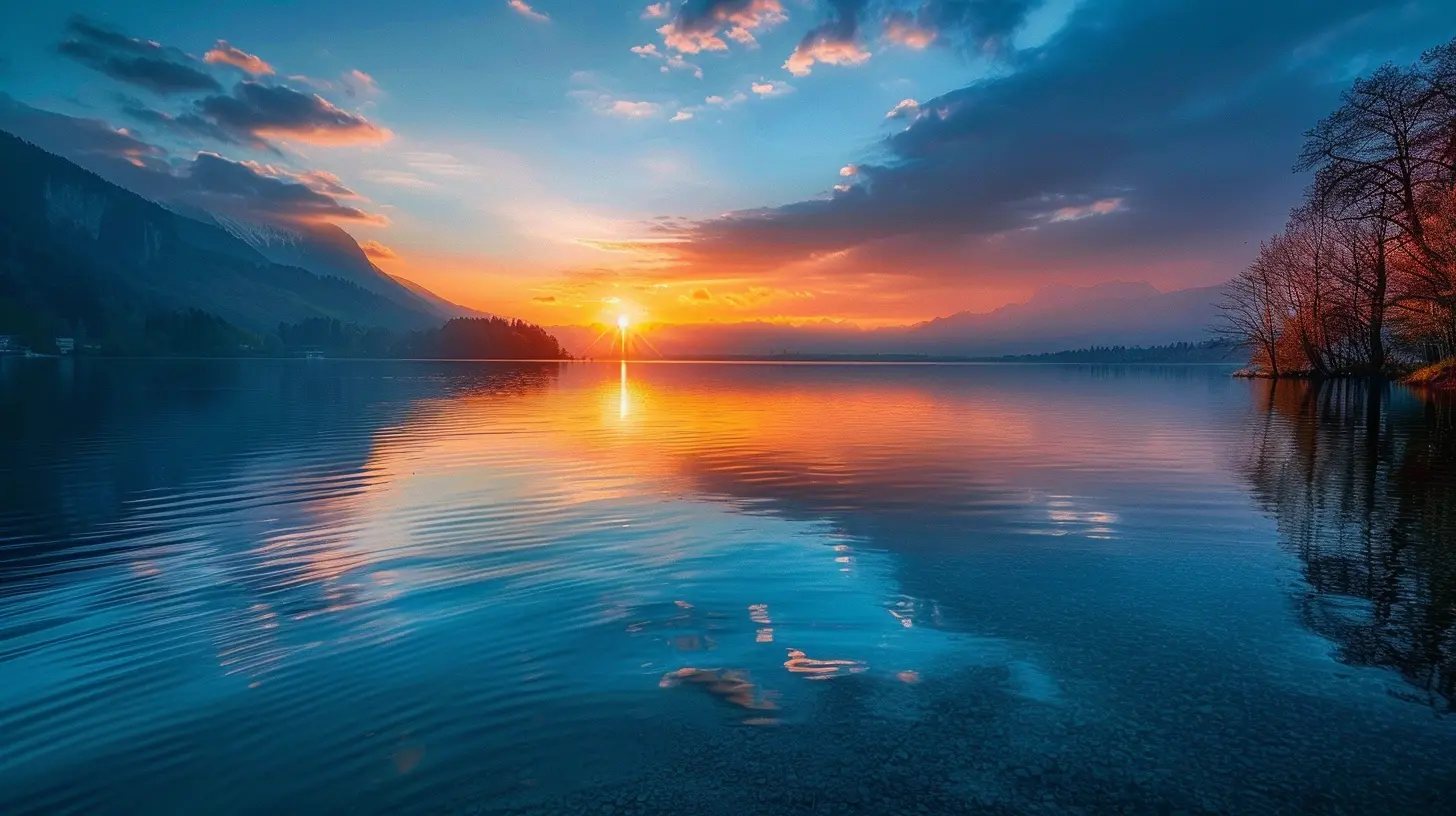
A reflective sunset requires three conditions to line up: calm surface water, a clear line of sight to the horizon, and a sun that sets at a favorable angle relative to your position. Miss any one of them and you get a pleasant evening instead of a transcendent one.Surface texture is the first variable. Even a light breeze of 8 to 12 kilometers per hour can roughen a lake enough to scatter reflection into glitter. Glitter has its own appeal, but it is not a mirror. The physics are straightforward: a smooth surface reflects light at a consistent angle, preserving the image, while a rippled surface bounces light in many directions, destroying coherence. This is why small, sheltered lakes outperform large open ones more often than not. A bay tucked behind a ridge, a lake ringed by dense forest, or a body of water sitting in a deep valley all cut wind before it reaches the surface.
Second, the horizon. A lake facing west with nothing between you and the setting sun gives you the full arc of color. A lake walled in by peaks can still produce spectacular reflections, but the sun must set in a gap, a col, or over a lower shoulder of the range. Some of the most dramatic images come from exactly this geometry, where a single beam of light threads through a mountain pass and paints a stripe down the water.
Third, the angle of view. Reflections are strongest when you look across the water toward the sun, roughly perpendicular to the surface. Standing at the eastern shore of a west-facing lake places the sunset directly in front of you. Standing at the northern or southern end gives you a glancing angle where the reflection compresses into a narrow band. Neither is wrong, but they produce very different pictures, and knowing which you want changes where you park the car.
The Role of Elevation and Air Clarity
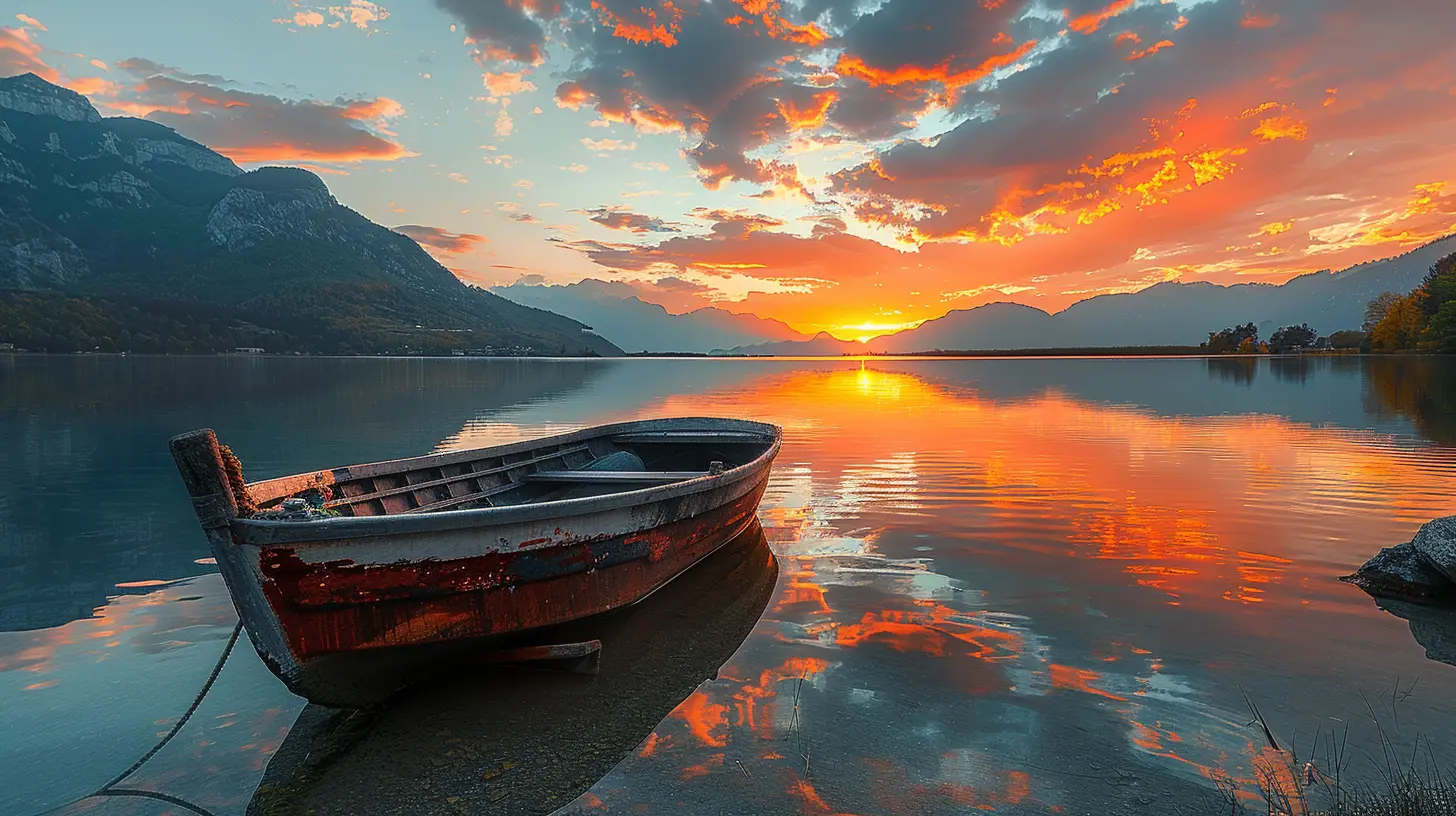
High-altitude lakes have an unfair advantage. Thinner atmosphere scatters less light, so the reds and oranges of a sunset arrive more saturated and last longer. Add cold, dense air settling into a valley basin at dusk, and you get the still conditions that mirror-like reflections demand.There is a trade-off. Alpine lakes are unpredictable. A system that looks stable at 4 p.m. can collapse into wind and cloud by 7 p.m. Lowland lakes in temperate forests are more reliable but rarely deliver the same color intensity. If you are planning a single trip around one sunset, favor reliability. If you have several evenings to work with, chase the altitude.
Air clarity matters as much as elevation. Smoke from wildfires, dust, and humidity all mute a sunset. Ironically, a small amount of haze can enhance color by filtering blue light, which is why some of the most photographed sunsets occur in the weeks after a moderate fire season. Heavy smoke, however, kills the show entirely. Check air quality indices and satellite imagery before committing to a long drive.
What Separates a Good Reflection Lake from a Great One
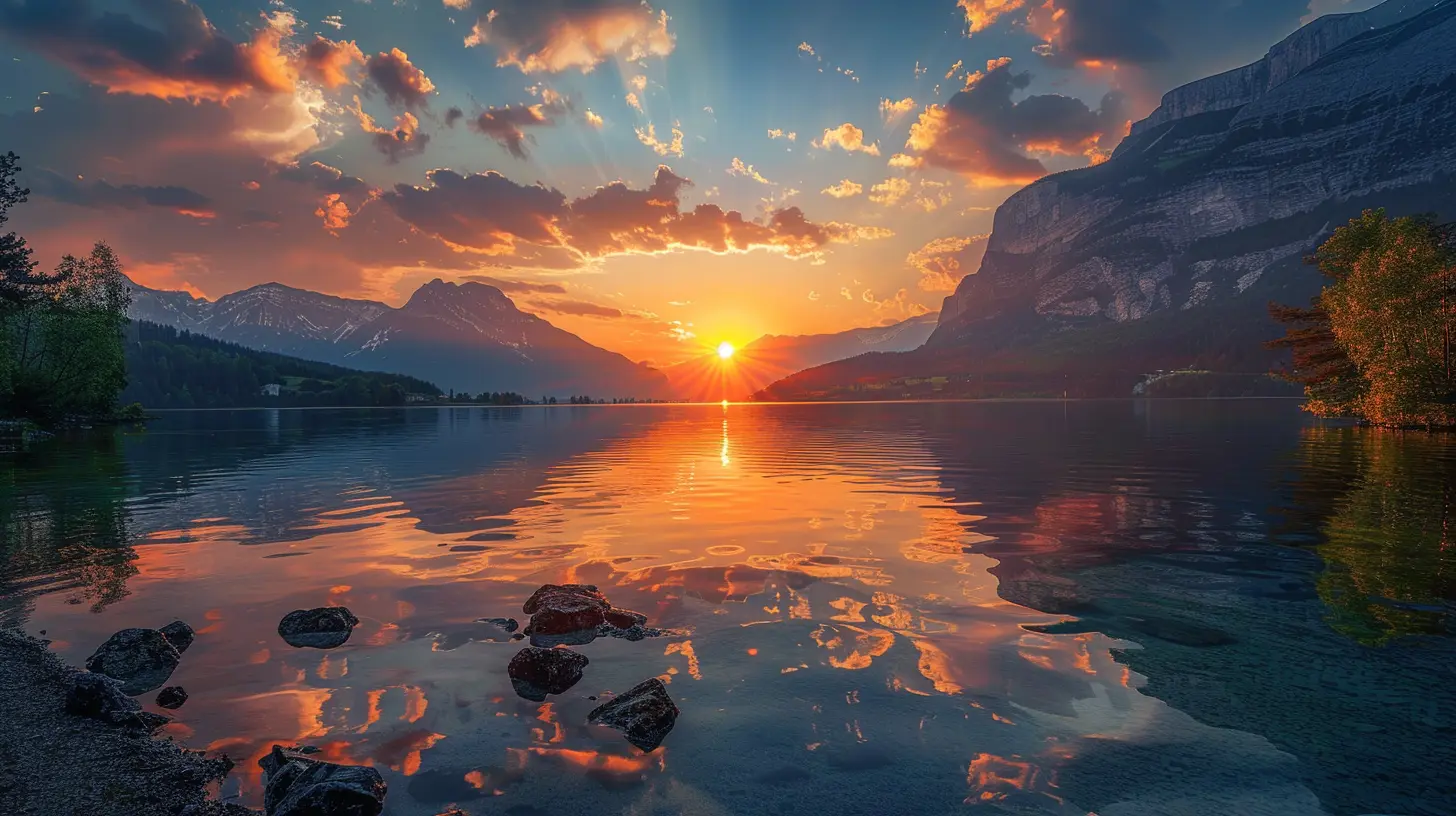
Experienced landscape photographers evaluate lakes on five criteria. You should too.Wind shelter. Look at the surrounding topography on a map. Ridges, dense conifer stands, and narrow valleys all block wind. A lake sitting on a broad plateau with no protection will rarely be calm at sunset.
Shoreline access and orientation. You need a clear, safe vantage point on the correct side of the water. A perfect lake with no legal access or with cliffs dropping straight into the water is useless for a sunset shoot.
Depth and bottom composition. Shallow lakes with muddy bottoms turn turbid after rain, which dulls reflections. Deep, clear lakes with rocky or sandy bottoms hold a cleaner mirror.
Foreground interest. A reflection alone is beautiful but flat. Rocks, dead trees, a dock, or a curving shoreline give the image depth and scale. The best lakes offer these elements naturally.
Crowd dynamics. A crowded lake at sunset is not necessarily a bad lake, but it changes your approach. You may need to arrive two hours early, hike past the main viewpoint, or choose a shoulder season.
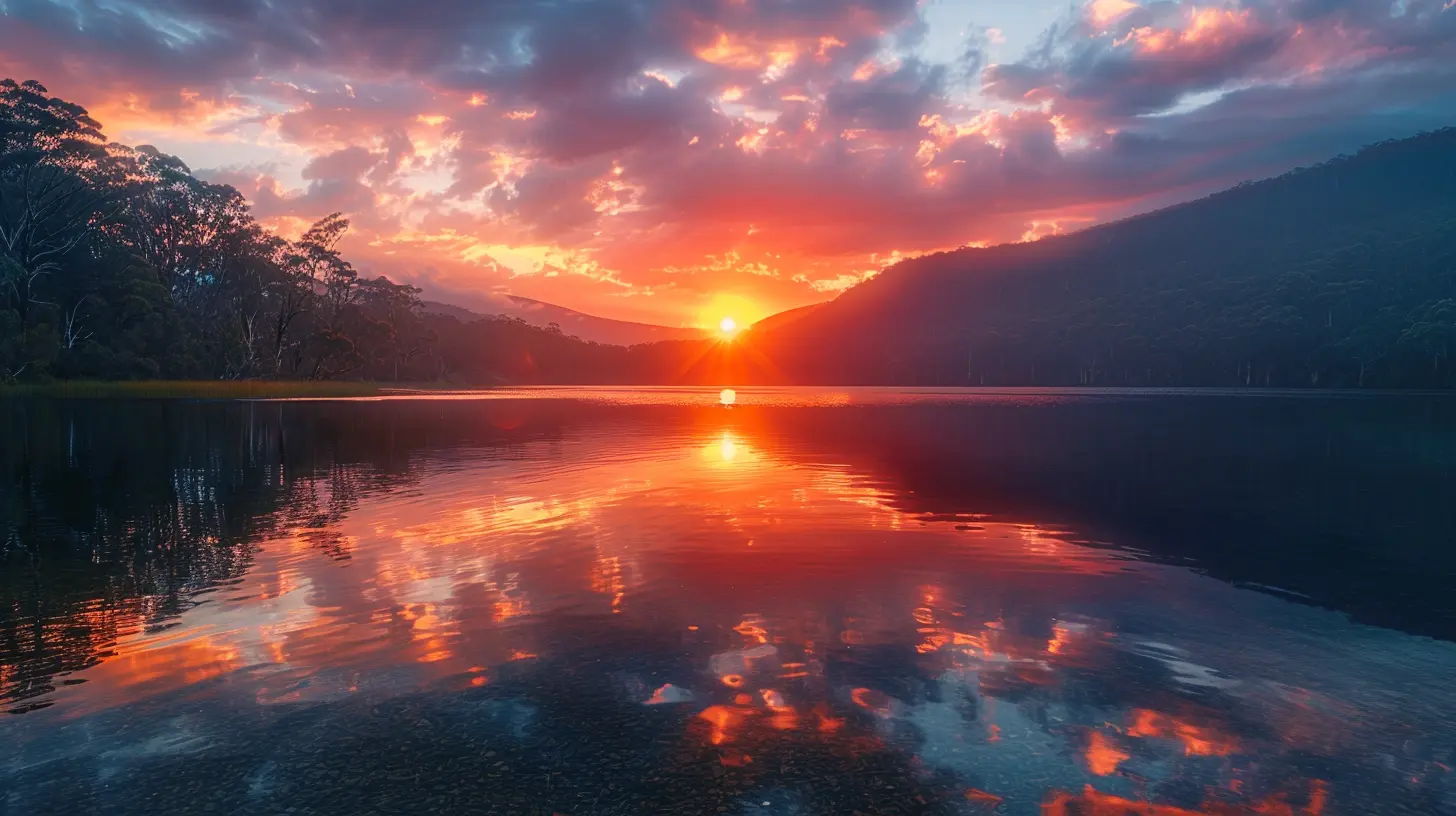
Best Lakes for Reflective Sunset Views in 2026
The following selections balance reliability, access, and visual payoff. They span multiple continents and difficulty levels, and each one earns its place for a specific reason worth understanding.Lake Matheson, New Zealand
Lake Matheson is the textbook example of a reflective lake, and for good reason. It sits in a shallow depression surrounded by temperate rainforest, which blocks wind almost completely on still evenings. The dark water, stained by forest runoff, acts as a natural mirror with minimal glare. On a clear evening, the Southern Alps and Aoraki Mount Cook reflect across the surface in near-perfect symmetry.The catch is weather. The West Coast of the South Island receives heavy rainfall, and clear sunsets are not guaranteed. Plan for at least three evenings if this lake is your priority. The classic viewpoint, reached by a short loop track from the car park, fills quickly. Walk further along the circuit to the Reflection Island platform for a quieter, equally strong composition.
Lake Bled, Slovenia
Lake Bled offers something rare: a reflective sunset with architecture in the frame. The island church and the clifftop castle give the reflection a focal point that pure landscape lakes lack. The lake is small enough to stay calm in moderate wind, and the surrounding hills block the worst of the gusts.The trade-off is popularity. Bled is a major tourist destination, and the western shore at sunset is busy. Arrive early, or take the longer walk around the southern shore where you can find gaps between trees. Off-season visits in late October offer similar light with a fraction of the crowd.
Moraine Lake, Canada
Moraine Lake in Banff National Park is famous for a reason that directly serves sunset photographers: the Valley of the Ten Peaks creates a dramatic, jagged skyline that reflects with startling clarity when the water is calm. The lake is glacially fed, deep, and cold, which keeps it clear.Access is the main consideration. The road to Moraine Lake is subject to seasonal restrictions and shuttle requirements, and parking fills before dawn in peak season. For sunset specifically, you avoid the sunrise crowd but still need to plan transport. Check current park regulations before you go, as policies change year to year.
Lake Wanaka, New Zealand
Wanaka offers a different proposition. It is a large lake, which normally works against calm reflections, but its western arms and sheltered bays can turn glassy in the evening. The lone willow tree in the water near the town shoreline has become an icon, and it works best at sunset when the light comes from behind and the tree silhouettes against reflected color.Because Wanaka is large, wind is your enemy. Check the forecast for the specific bay you plan to visit, not the town. A sheltered inlet can be calm while the main body of the lake is choppy.
Plitvice Lakes, Croatia
The terraced lakes of Plitvice present a unique reflective opportunity. The water flows over travertine barriers, creating a series of pools at different elevations. At sunset, the upper lakes catch light while the lower pools hold reflections of the surrounding beech forest.Timing matters here because the park operates on fixed hours and restricts access to certain areas. Sunset visits require checking the seasonal schedule, and the best reflections often occur in the quieter upper lakes rather than the famous lower waterfalls. This is a case where the iconic view and the best sunset view are in different places.
Lake Louise, Canada
Lake Louise shares Moraine Lake's glacial clarity but offers a larger, more open surface. The Victoria Glacier at the far end provides a bright, reflective subject that glows at sunset. The challenge is wind. The lake sits in a broad valley, and afternoon gusts are common.The solution is to shoot from the eastern shore near the boathouse, where you look straight down the lake toward the glacier and the setting sun. If the wind picks up, wait. Calm often returns in the final 20 minutes before sunset as the valley air stabilizes.
Laguna de los Tres Approach Lakes, Argentina
For travelers willing to hike, the small glacial tarns below Mount Fitz Roy deliver reflections that rival anything on this list. The lakes are shallow, sheltered, and positioned to catch the last light on the granite peaks. The reflection of Fitz Roy turning pink and orange at sunset is one of the great sights of Patagonia.This is not a casual stop. The approach involves a multi-hour hike with significant elevation gain, and weather in Patagonia changes fast. Treat this as a backpacking objective with a flexible window of several days.
How to Time a Sunset Reflection
Timing is where most people lose the shot. The peak color of a sunset is not at the moment the sun touches the horizon. It is typically 10 to 25 minutes after, during the period photographers call the afterglow. This is when the sky holds its deepest reds and the water, now evenly lit, reflects them without the harsh glare of the sun itself.Arrive at least 90 minutes before the official sunset time. Use the first hour to scout your composition, check the wind, and set up. The 30 minutes before sunset give you the transition light. The 30 minutes after give you the color. Many people leave too early, right when the best light is arriving.
Wind forecasts are more useful than cloud forecasts for reflection planning. A prediction of 5 to 10 km/h at the lake surface is often calm enough for a clean mirror, especially in a sheltered bay. Anything above 15 km/h will likely break the reflection. Check hourly wind data for the specific location, not a regional average.
Gear and Technique for Reflective Sunset Photography
You do not need exotic equipment, but a few choices make a real difference.A tripod is essential. After sunset, light drops fast, and you will need exposures of a second or longer to capture the afterglow. Handholding will not work.
A polarizing filter can deepen the reflection by cutting glare from the water surface. Use it carefully. Too much polarization darkens the reflection itself. Rotate the filter and watch the effect in live view until the reflection is strong but not muddy.
A neutral density filter lets you extend exposure time, which smooths any residual ripple into a silky surface. This is a useful trick when the lake is almost calm but not quite. A 30-second exposure can rescue a shot that a 1/60 second exposure would ruin.
Focus on the reflection, not the sky. If you focus at infinity on the distant horizon, the reflection in the foreground may fall slightly soft. Use a smaller aperture, around f/8 to f/11, and focus at the hyperfocal distance to keep both the reflected image and any foreground rocks sharp.
Common Mistakes and Misconceptions
The biggest misconception is that any lake will reflect a sunset if you show up at the right time. In reality, a lake needs the right physical characteristics and the right conditions. A large, exposed lake on a windy evening will not reflect anything, no matter how spectacular the sky.A second mistake is choosing a viewpoint based on a map rather than on orientation. People drive to the nearest access point and assume it faces the sunset. Many lakes have their main parking on the eastern or northern shore, which may not align with the setting sun. Check a compass or a sun-tracking app before you commit.
A third mistake is over-editing. Reflections are delicate. Heavy contrast and saturation adjustments can make the water look artificial and destroy the subtle gradient that makes a real reflection beautiful. Edit gently. The scene did the work. Your job is to not ruin it.
Finally, do not ignore safety. Shorelines at dusk are often uneven, slippery, and poorly lit. Bring a headlamp, tell someone your plan, and avoid scrambling on wet rocks for a slightly better angle. No photograph is worth a fall.
Practical Planning Checklist
Before you commit to a lake for a sunset reflection, work through these questions:- Does the lake have a sheltered shoreline or bay that blocks prevailing wind?
- Is there a legal, safe viewpoint on the side of the lake facing the sunset?
- What is the hourly wind forecast for the exact location, not the nearest town?
- When is the afterglow window, and have you planned to stay 30 minutes past sunset?
- Do you have a tripod, and have you practiced a long exposure?
- Is there a backup lake nearby in case conditions fail?
If you can answer all six, you are ahead of most people standing at the water's edge.
Final Thoughts
The best reflective sunset lakes are not simply the most beautiful lakes. They are the ones where geography, weather, and access align to give you a real chance at that perfect mirror moment. Some, like Matheson and Bled, are reliable and accessible. Others, like the Patagonian tarns, demand effort and flexibility. Both types belong on a serious traveler's list.What matters most is understanding why a lake reflects well and when to be there. That knowledge turns a lucky evening into a repeatable one, and it separates a snapshot from an image you will want to print and hang.
all images in this post were generated using AI tools
Category:
Sunset SpotsAuthor:

Reed McFadden