The Importance of Personal Space in Different Cultures
30 December 2025
Have you ever stepped too close to someone and instantly felt the vibe shift? Or maybe someone got too close to you, and suddenly you were doing the subtle (and sometimes not-so-subtle) “backward shuffle”? Personal space—it’s one of those unspoken social rules we all follow, even if we don’t always realize it. But here’s the kicker: what feels like the perfect distance in one culture might feel way too close or painfully distant in another.
Welcome to the fascinating, invisible world of personal space across cultures. In this article, we’ll dive into how different parts of the world interpret this invisible bubble, why it matters more than you might think—especially when you're traveling—and how understanding it can totally upgrade your cultural smarts and travel game.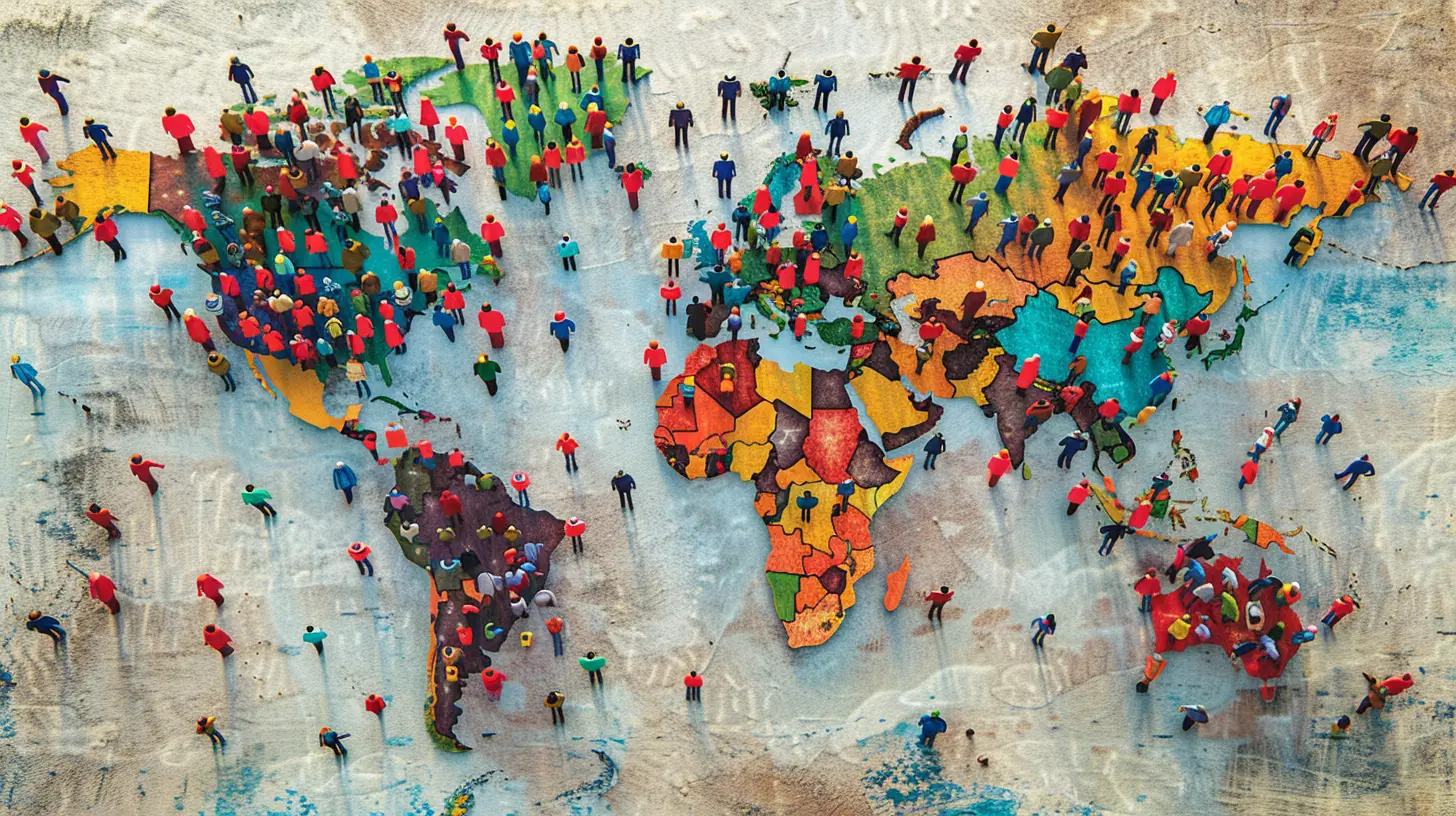
What Is Personal Space, Anyway?
Let’s start with the basics. Personal space is that invisible boundary we keep around us—it’s ours, and we feel weird when someone breaks it without “permission.” Think of it like an emotional force field. It gives us a feeling of safety, comfort, and autonomy.Everyone has their own preference for how big this “bubble” is, but these preferences don't form in a vacuum—they’re shaped by the culture we're raised in. And that’s where things get interesting.
The Cultural Bubbles: Personal Space Around the World
1. Close Contact Cultures: Where Closeness is Comfort
Places like Latin America, the Middle East, Southern Europe, and parts of Africa are known for having what researchers call “high-contact cultures.” Here, people tend to stand much closer during conversations, hug or touch more often, and generally feel more connected when there’s physical closeness.So, if you're traveling to Brazil and someone stands inches from your face while chatting—don’t freak out. They're not invading your space; they're actually being friendly.
👉 Pro tip: In these cultures, stepping away might signal coldness or disinterest.
2. Low Contact Cultures: Where Distance is Respect
Now let’s flip the script.Countries in Northern Europe (like Sweden, Finland, and Germany), the U.S., Canada, and Japan tend to favor more personal space. In these “low-contact” cultures, people prefer at least an arm’s length of distance during conversations—and even more for strangers.
If you get too close too fast in these cultures, you might be seen as pushy or even threatening.
👉 Pro tip: Want to show respect in Japan? Keep your distance, bow instead of hugging, and avoid unnecessary touching—especially in public.
3. Middle Ground? Maybe...
Some countries land somewhere in the middle—where personal space is flexible. Think of places like India, China, or Thailand. In urban settings, tight spaces might force people to accept closeness, but the cultural expectation still leans toward moderating contact, especially with strangers.In these spaces, context matters. Crowded marketplace? Close is okay. Formal meeting? Keep it professional and distant.
Why Personal Space Matters When You Travel
Alright, now you’re probably thinking, “Okay, so people stand closer or farther away. What’s the big deal?”Here’s the thing—it’s actually a huge deal. Misreading personal space cues can lead to awkward moments, misunderstandings, or even offend someone without you realizing it.
Imagine being in Spain, chatting with a local, and you unconsciously keep backing up every time they lean in. You’re trying to be comfortable, but they might think you’re not interested in the conversation.
Or picture this: you're in Finland, and you go in for a friendly shoulder pat. Your new friend freezes like a deer in headlights. Yikes.
Understanding personal space helps you:
- Show respect in other cultures.
- Build better relationships while traveling.
- Avoid embarrassing (or even offensive) situations.
- Feel more confident and culturally aware.
Body Language & Personal Boundaries: Reading Between The Lines
Personal space isn’t just about how far we stand from each other. It’s also about body language. Eye contact, gestures, facial expressions, and physical touch all play a role.In Italy, for example, people might gesture wildly and make strong eye contact. This intense communication style might feel overwhelming to someone from a more reserved culture like Japan or Western Canada.
On the flip side, cultures that value modesty and restraint may use less direct body language, and that doesn’t mean they’re being cold—it’s just how they express respect.
Understanding these signals can help you “read the room” wherever you are.
Cultural Factors That Shape Personal Space Norms
Ever wonder what shapes a culture’s idea of personal space? It’s not random—there are some key factors at play:1. Population Density
In crowded cities like Tokyo or Mumbai, people are just used to being physically close because space is limited. That doesn’t mean they like it—but they’ve adapted.2. Climate
Warm-weather countries often have more physical closeness in social norms. The sun brings people outside more often, and with that comes more interaction—and less distance.3. Social Norms & Values
Cultures that emphasize community and collectivism (Latin America, parts of Asia) often have smaller personal space bubbles. Individualistic cultures (U.S., Germany) tend to favor larger bubbles to protect personal freedom.Technology and the Changing Face of Personal Space
Here’s a fun twist—how has technology changed personal space?Think about video calls. There’s basically zero physical distance between you and the person on-screen, and yet, it doesn’t feel invasive. But then, try getting that close to someone in an elevator—it’s uncomfortable fast.
Social media has also blurred the lines. We share photos, updates, and personal details with hundreds of people daily. This new “digital closeness” can sometimes clash with our real-world boundaries.
So, while personal space is a physical concept, it's adapting in real-time as our world becomes more connected than ever.
Personal Space and Tourism: What Travelers Should Know
When you’re a tourist, you’re not just seeing the sights—you’re interacting with people, from hotel staff to locals at a café to fellow travelers. And that's where respecting personal space can make or break how you're perceived.Do:
- Observe before acting. Watch how locals interact and mirror their behavior.- Ask if you're unsure. A quick, “Is it okay if I sit here?” or “Can I give you a hug?” goes a long way.
- Be flexible. Your comfort zone might get a little stretch—but that’s the beauty of travel.
Don’t:
- Assume your norms are universal.- Force physical contact.
- Take offense if someone steps away or avoids eye contact.
Teaching Kids About Cultural Personal Space
Traveling with family? This is a great opportunity to teach kids about cultural sensitivity. Kids are naturally curious but don’t always understand boundaries. Walking them through expectations before entering a new country or situation can help avoid awkward moments. Plus, it’s a great way to shape them into respectful global citizens.Personal Space Isn’t About Being Right or Wrong
Let’s clear this up—no culture is “better” at personal space. It’s simply different. What’s comfortable for one person might feel stifling or aloof to another, depending on their cultural background.Treat it like trying a new dish. It might seem strange at first, but with an open mind and some curiosity, you’ll grow to understand (and maybe even enjoy) the differences.
By adapting and being aware, you not only show respect, but you also get to experience life through a richer, more colorful lens.
7 Quick Tips To Master Personal Space Everywhere You Travel
Let’s wrap this up with a cheat sheet:1. Observe local behavior first – people-watch to gauge norms.
2. When in doubt, leave space out – give more room than you think is needed.
3. Respect privacy cues – body language speaks volumes.
4. Avoid unnecessary touching – especially in more reserved countries.
5. Watch your body orientation – facing slightly sideways feels less intrusive.
6. Adapt your gestures – big hand movements can feel aggressive in some cultures.
7. Be open to learning – and forgive yourself for the occasional blunder.
Final Thoughts: Your Space, Their Space, Our Space
Travel changes you—but only if you let it. Understanding the importance of personal space in different cultures isn’t just about comfort zones. It’s about empathy, awareness, and choosing connection over assumption.It’s the invisible handshake that says, “I see you, I respect you, and I’m here to understand.”
So, next time you're navigating a busy market in Istanbul, walking through a serene garden in Kyoto, or sipping coffee in a Parisian café—pay attention to the space between you and the people around you.
Because sometimes, the biggest cultural insights are found in the smallest, quietest gaps.
all images in this post were generated using AI tools
Category:
Cultural EtiquetteAuthor:

Reed McFadden
Discussion
rate this article
2 comments
Heath Marks
This article beautifully highlights the nuances of personal space across various cultures. Understanding these differences is crucial for fostering respectful interactions while traveling. It encourages travelers to be mindful and adapt their behaviors, ultimately enriching their experiences and promoting harmonious connections with locals. A must-read for culturally aware adventurers!
February 10, 2026 at 6:50 PM
Reed McFadden
Thank you for your insightful comment! I'm glad you found the article valuable for enhancing cross-cultural interactions. Happy travels!
Graham Brown
Respect boundaries or else!
January 7, 2026 at 4:32 PM
Reed McFadden
Absolutely, respecting boundaries is crucial for fostering understanding and harmony across cultures.