Start Your Grand Tour on Italy’s Via Appia Antica in 2027
10 October 2026
In 2027, Italy will open a continuous walking route along the Appian Way, the ancient Roman road that once carried legions, merchants, and pilgrims from the capital to the southern port of Brindisi. For travelers who have spent years circling the same crowded highlights of Rome, Florence, and Venice, this is a rare invitation: a chance to begin a slow journey on stones that have been in use for more than two thousand years.
The idea of a Grand Tour is not new. Young European aristocrats once spent months or years traveling through Italy as a finishing school for taste, language, and judgment. What is new is that a single, well-marked path now makes a version of that journey possible on foot, at human pace, without a private carriage or a team of guides. The Via Appia Antica is the natural starting line.
This article explains what the 2027 opening actually means, how the route works in practice, what to expect along the way, and how to plan a walk that respects both the archaeology and your own limits. It is written for curious travelers who want more than a checklist, and for anyone who suspects that the best way to understand Rome is to leave it on foot.
What Is Actually Changing in 2027
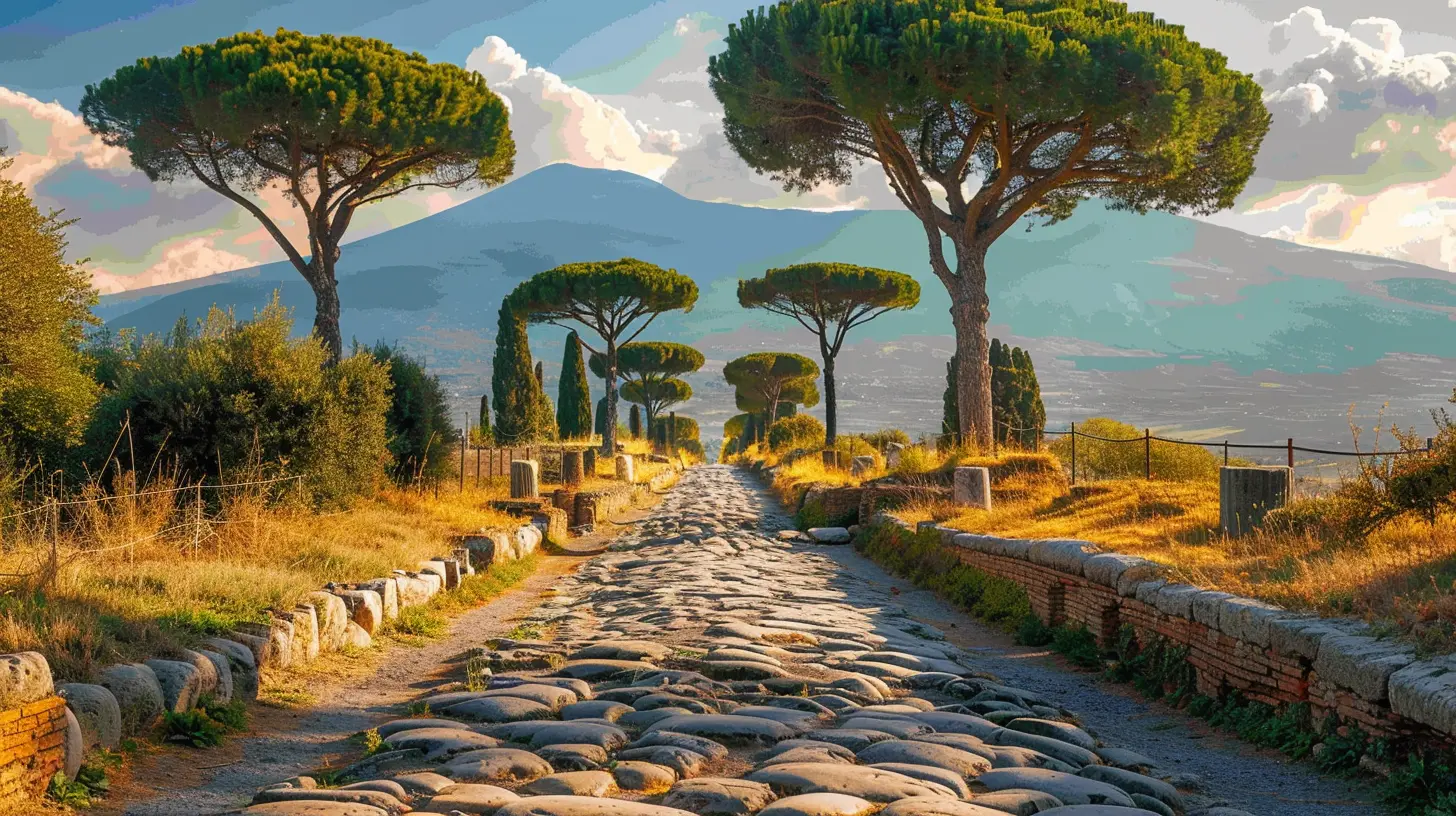
The Appian Way has never been closed to walkers. Sections inside Rome, particularly the stretch through the Parco Regionale dell'Appia Antica, have been walkable for decades. The problem has always been continuity. The ancient road survives in fragments, and between those fragments lie modern highways, private land, industrial zones, and stretches where the original basalt paving has been buried or removed.The 2027 project, often described in Italy as the Cammino della Via Appia, is best understood as an effort to connect those fragments into a single signposted itinerary. Where the original road survives, you walk on it. Where it does not, the route follows parallel paths, secondary roads, or restored tracks that keep the historical alignment in view. The goal is not to recreate a Roman road exactly, but to give walkers a continuous, legally accessible, and reasonably safe line from Rome to the southern coast.
That distinction matters. Some early coverage has implied that the entire ancient road will be restored and reopened. It will not be. Restoration of that scale is neither feasible nor desirable, and much of the original route lies under farmland, towns, and modern infrastructure. What you get instead is a waymarked long-distance trail with a strong historical spine.
The Practical Meaning for Walkers
For a traveler, the changes translate into three concrete benefits:- Reliable waymarking, so you spend your energy walking rather than navigating.
- A defined sequence of stages, which makes booking accommodation and planning distances simpler.
- Better coordination between parks, municipalities, and heritage authorities, which reduces the odds of hitting an unexpected closure.
It also means the route will attract more people. If you have ever wanted to walk the Appian Way without company, 2027 is likely to be the last year that feels genuinely quiet. That is not a reason to rush, but it is a reason to plan deliberately rather than assume you can improvise.
Why the Appian Way Is the Right Place to Begin
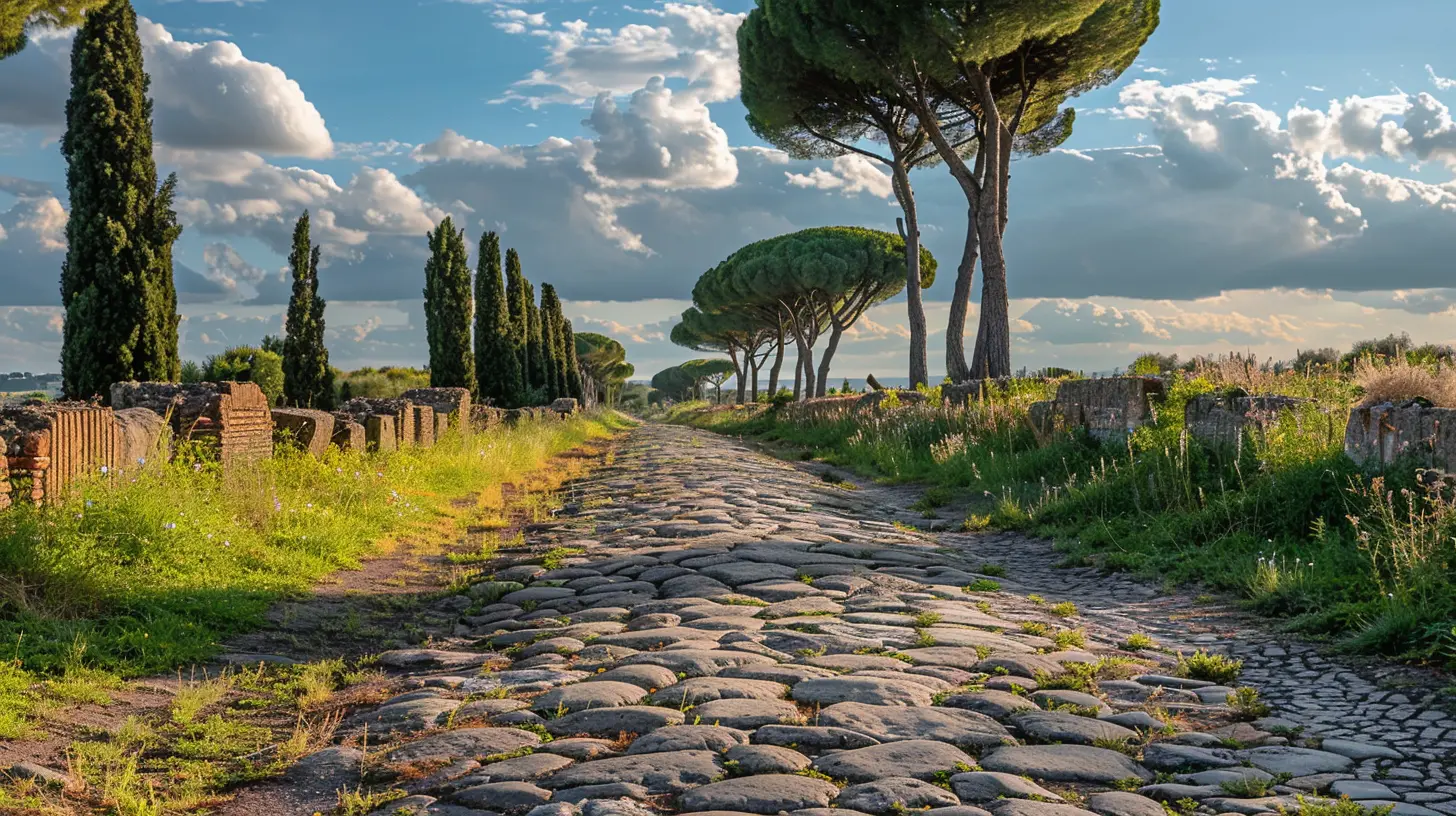
Most walking routes in Italy are chosen for scenery. The Appian Way is chosen for something harder to find: uninterrupted contact with a single idea across a very long distance.Begun in 312 BC under the censor Appius Claudius Caecus, the road was engineered to move armies and supplies with speed and predictability. Its construction was remarkably consistent: a foundation of stones, a layer of gravel or sand, and a surface of tightly fitted polygonal basalt blocks. Roman engineers aimed for straight lines where the terrain allowed, and the road's alignment still shapes the landscape today. Modern roads, property boundaries, and even town plans follow it.
Walking it is not a museum visit. It is a lesson in how infrastructure persists. You will pass tombs that once lined the road outside the city, because Roman law forbade burial inside the walls. You will cross aqueducts that carried water for hundreds of years. You will walk through towns that exist because the road made them worth defending. And you will notice, again and again, how the same route has been used for trade, pilgrimage, and migration long after the empire that built it disappeared.
A Grand Tour in the Original Sense
The historical Grand Tour was not a race. It was an education. Travelers stayed for weeks, hired tutors, sketched ruins, and learned to see. The Appian Way supports that model better than a train-based itinerary, because progress is slow enough to notice change.If you walk from Rome toward the south, you move through distinct layers of history and landscape. The immediate outskirts are dominated by early Christian catacombs and republican tombs. Further out, the terrain opens into the Alban Hills and the flat agricultural land of the Pontine plain. Eventually the route reaches the coast and the southern regions, where Greek, Roman, Norman, and Spanish influences overlap. Each day feels like a different century, even though you are covering only twenty or so kilometers.
How the Route Is Organized
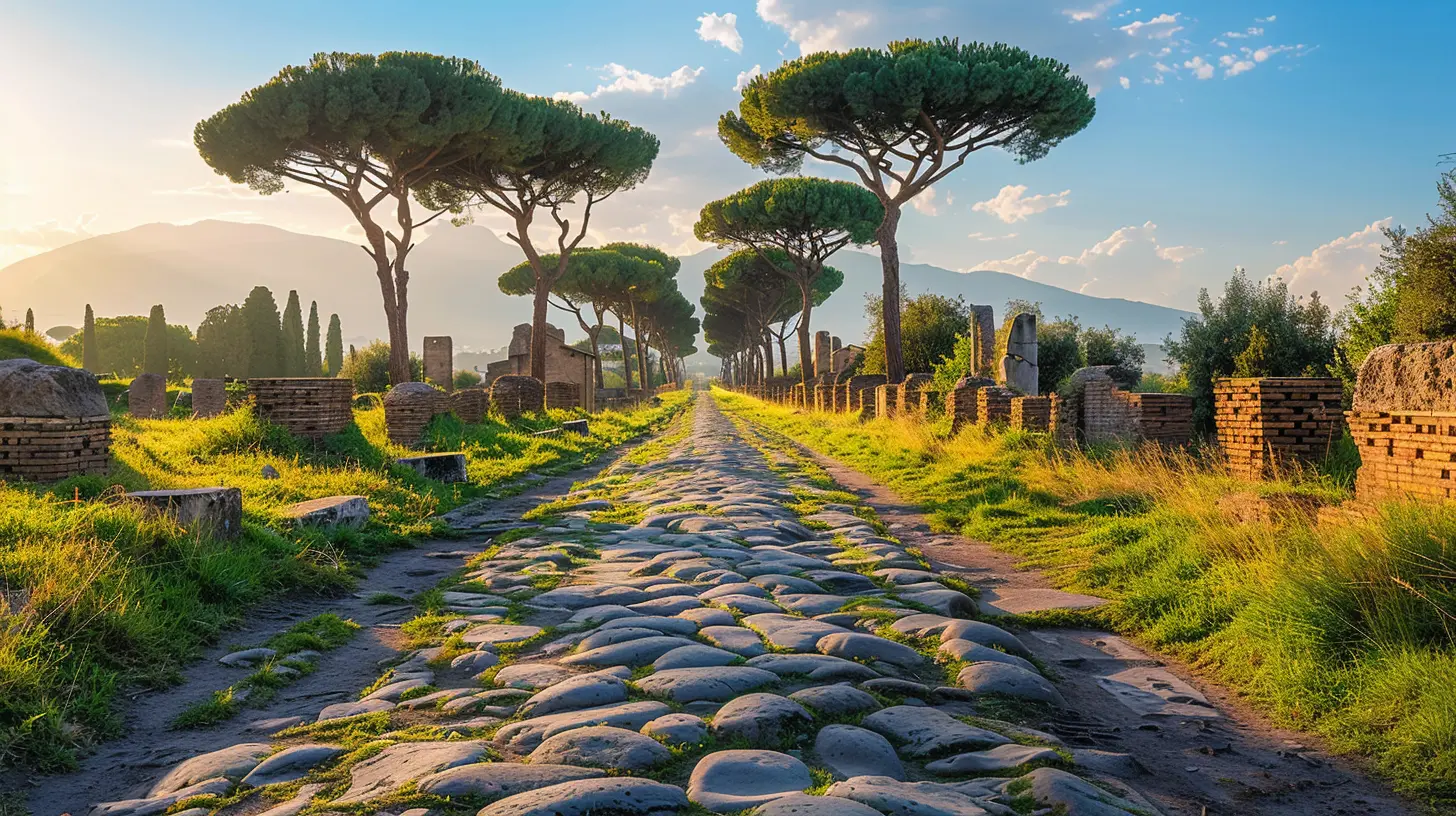
Long-distance routes in Italy are usually divided into stages, and the Appian Way is no exception. A stage is a day's walk, typically between fifteen and twenty-five kilometers, ending in a place with food and lodging. The exact stage divisions for 2027 are still being finalized, but the pattern is predictable.The Roman Section
The first day or two are the most famous and the most crowded. From the Porta San Sebastiano, the road runs past the Catacombs of San Callisto and San Sebastiano, the Circus of Maxentius, and the Tomb of Cecilia Metella. This section is partly paved with original basalt, uneven and polished by centuries of use. It is beautiful, and it is busy, especially on weekends.A common mistake is to treat this section as representative of the whole route. It is not. It is the most accessible and most visited part, and it is best walked early in the morning or on a weekday. If you only have one day, this is where you should spend it. If you have two weeks, do not linger too long here.
The Regional Park and Beyond
Once you leave the immediate archaeological park, the route enters the Parco Regionale dell'Appia Antica, a protected area that mixes ruins, farmland, and fragments of the original road. Waymarking here has improved in recent years, but it is still uneven in places. This is where a paper map or an offline GPS track is genuinely useful, not just a backup.Beyond the park, the route becomes more varied. Some stretches follow the ancient alignment closely. Others divert onto quieter roads. You will encounter sections where the original paving has been incorporated into a modern street, and you will walk on asphalt for hours. This is normal for long-distance routes in Italy, and it is worth accepting rather than resenting. The alternative would be closing the route entirely.
The Southern Stretches
As you move into Lazio, Campania, Basilicata, and Puglia, the character changes. The archaeology becomes less monumental and more dispersed. You will pass through towns that grew up around the road, and you will see how agriculture, not tourism, still shapes daily life. Accommodation becomes more limited, and English is spoken less often. This is not a problem if you plan, but it is a problem if you assume the whole route works like the first twenty kilometers.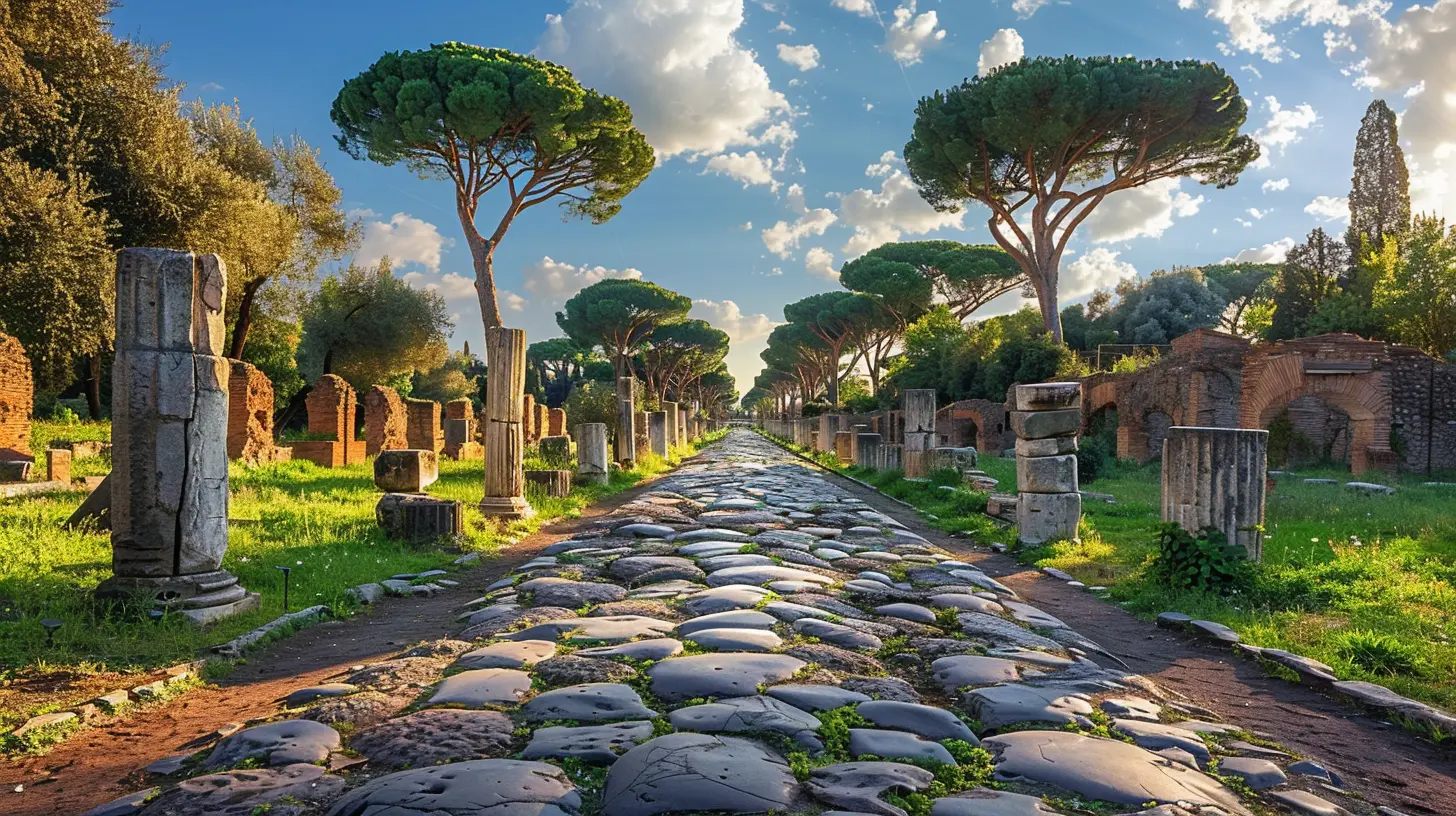
Planning Your Walk: Realistic Advice
The single most common mistake people make with long-distance routes in Italy is overestimating their daily capacity. Walking twenty kilometers on flat ground in good weather is achievable for most fit adults. Doing it for two weeks in a row, in summer heat, on uneven stone, is a different matter.Distance and Terrain
The original Appian Way runs roughly 500 kilometers from Rome to Brindisi. A continuous walk of the full route would take most people four to six weeks, depending on pace and rest days. The 2027 route may be shorter or longer depending on final alignments, but the scale is similar.Do not plan to walk the whole thing on your first attempt unless you have already completed comparable long-distance walks. A more sensible approach is to choose a section that matches your available time and interest. The Roman section is ideal for a long weekend. The stretch from Rome to the coast can be done in about a week. The southern sections reward travelers with more time and a taste for quieter landscapes.
Season and Weather
Late spring and early autumn are the best windows. Summer heat in the Pontine plain and southern Italy can be brutal, and shade is scarce. Winter is mild but wet, and some accommodation closes. If you walk in summer, start before dawn and finish by early afternoon. If you walk in winter, expect shorter days and plan accordingly.Accommodation and Food
Along the Roman section, hotels and guesthouses are plentiful. Further south, options thin out. In some stages, the only lodging may be a small family-run hotel or an agriturismo several kilometers off the route. Book ahead, especially in 2027, when demand is likely to spike. Carry cash, because not every small business accepts cards.Food is one of the great pleasures of this route. In the south, you will find simple, excellent cooking based on local produce, olive oil, and pasta. Do not expect every town to have a restaurant open at midday. In smaller places, shops close for several hours in the afternoon, and dinner may not start until eight in the evening.
Common Misconceptions
A few ideas about the Appian Way circulate widely and are worth correcting.It is not a wilderness trail. You are never far from a road, a town, or a house. This is a landscape shaped by people for millennia, and that is part of its value.
It is not uniformly paved with ancient stone. Long stretches are asphalt, gravel, or dirt. The original basalt appears in sections, often the most photographed ones.
It is not a pilgrimage route in the strict sense. It overlaps with pilgrimage history, and some walkers treat it as a spiritual journey, but it does not have the same infrastructure or tradition as the Camino de Santiago.
It is not dangerous, but it is not risk-free. Traffic on some road sections is a real concern. Walk facing oncoming traffic where there is no sidewalk, wear something visible, and avoid walking at dusk.
Practical Best Practices
If you want the route to reward you rather than exhaust you, follow a few principles.Walk shorter days than you think you can handle, at least for the first week. Your body adapts, and starting conservatively prevents injury.
Carry water and a hat every day, even in mild weather. Refill points exist but are not always where you need them.
Learn a few phrases in Italian. In smaller towns, goodwill matters more than fluency.
Respect closures and private property. Some sections of the ancient road cross farmland or restricted archaeological areas. Signs are there for a reason.
Build in rest days. A day off in a town you like is often the best part of a long walk.
Is 2027 the Right Year for You?
The opening of a continuous route is genuinely exciting, but it is not the only reason to walk the Appian Way. The road has been there for over two thousand years. What changes in 2027 is convenience, not substance.If you value quiet, consider walking before the official opening or in a shoulder season. If you value company and infrastructure, 2027 and the years after will be better. If you want the full experience, plan for several weeks and accept that some days will be about logistics rather than beauty.
The Grand Tour was never really about seeing everything. It was about seeing a few things properly. The Appian Way, walked slowly and with attention, offers exactly that. You start in Rome, you move south, and you let the road do what it has always done: connect one place to the next, and one century to another.
all images in this post were generated using AI tools
Category:
Iconic RoutesAuthor:

Reed McFadden