Road Tripping Through the Balkans: Iconic Routes to Try in 2027
1 November 2026
The Balkans have quietly become one of Europe's most rewarding road trip regions, and 2027 is shaping up to be an excellent year to plan a drive through this part of the continent. The reasons are practical rather than romantic. Highway projects in several countries are reaching completion, border procedures have become smoother for many travelers, and the region's mix of coastline, mountains, and old towns remains far less crowded than comparable routes in Western Europe. At the same time, the Balkans reward drivers who prepare properly. Roads vary dramatically in quality, mountain passes close without much warning, and the difference between a great route and a frustrating one often comes down to timing and local knowledge.
This guide covers the routes worth building a trip around in 2027, along with the practical detail that separates a smooth journey from a stressful one. It also explains why certain routes work better in specific seasons, where drivers commonly go wrong, and how to decide between competing options when your time is limited.
Why the Balkans Suit Road Tripping So Well
Distances Are Short, Landscapes Are Not
One of the region's underrated advantages is scale. You can drive from the Adriatic coast to a mountain plateau in a few hours, and from one capital city to another in half a day. That density means a two week trip can cover a remarkable variety of terrain without long, monotonous highway stretches. Compare this with a drive across France or Spain, where a single day can disappear into motorway miles with little to show for it.The trade-off is that short distances do not always mean fast driving. A 120 kilometer stretch of mountain road can take three hours or more. Experienced travelers in the region plan by time rather than distance, and that habit alone prevents most itinerary problems.
Costs Remain Reasonable, With Caveats
Fuel, food, and accommodation in most Balkan countries remain cheaper than in Western Europe, though prices have risen in popular coastal areas during peak season. The caveat is that rental cars can be surprisingly expensive, especially for one way rentals across borders. Drivers should compare total costs, including cross border fees and insurance, rather than just the daily rate.Border Crossings Have Improved, But Do Not Disappear
Several countries in the region are part of the Schengen area, while others are not. This affects how borders work in practice. Some crossings are quick and routine, while others can involve long queues in summer, particularly on the Adriatic coast and at popular mountain crossings. A common misconception is that all Balkan borders are slow and bureaucratic. In reality, many are fast, but a handful of specific crossings during peak season can cost you an hour or more. Knowing which ones to avoid is a genuine skill.
Route 1: The Adriatic Coastal Run, Croatia to Montenegro
The Route and Why It Works
This is the classic Balkan road trip, and for good reason. The route follows the Adriatic coast from northern Croatia down through Dalmatia, across a short stretch of Bosnia and Herzegovina, and into Montenegro. The appeal is the combination of clear water, historic walled towns, and the constant sense of driving along the edge of a continent.The route works best when you treat it as a slow journey rather than a transfer. Drivers who try to cover the whole coast in three days end up exhausted. Those who allow a week or more find that the small detours, a swim stop, a fishing village lunch, a short ferry hop to an island, become the highlight of the trip.
Practical Detail That Matters
The Croatian coastal road is busy in July and August. Traffic moves slowly through towns, and parking in places like Split or Dubrovnik can be difficult and expensive. The shoulder seasons of late May, June, and September offer better driving conditions and more reasonable prices. Early October is also viable, though some coastal services begin to wind down.The short crossing into Montenegro at Karasovic Brcko or via the Neum corridor in Bosnia requires attention to insurance. Some rental agreements do not automatically cover all the countries on this route, so confirm coverage in writing before you leave. Drivers who assume their policy covers the whole region sometimes face unpleasant surprises at the border.
Common Mistake on This Route
The most frequent error is underestimating the Neum corridor. Bosnia and Herzegovina has a short coastline, and the road passes through it briefly. This means two border checks in a short span. It is usually quick, but in summer it can slow considerably. Drivers with tight ferry bookings should build in buffer time.
Route 2: The Dinaric Mountain Loop, Croatia, Bosnia, and Montenegro
The Route and Its Character
For drivers who prefer mountains to coastline, the Dinaric loop is the stronger choice. A typical version runs inland from the Croatian coast into Bosnia and Herzegovina, through Mostar and the surrounding karst landscapes, then into Montenegro toward Durmitor and the Tara Canyon. The scenery is dramatic, the roads are winding, and the sense of remoteness is real.This route suits confident drivers who enjoy mountain roads. It does not suit anyone hoping to cover ground quickly. Average speeds drop sharply, and a stretch that looks short on a map can take most of an afternoon.
Why It Works and When It Does Not
The loop works because it connects several distinct landscapes within a manageable distance. Karst fields, deep canyons, and high plateaus follow one another in a way that keeps the drive interesting. It fails when drivers attempt it in a low clearance vehicle, or in poor weather. Mountain roads here are not forgiving, and fog or rain can turn a scenic drive into a tense one.Late spring and early autumn are the best windows. Midsummer is hot in the valleys but pleasant at altitude. Winter is not advisable on the higher sections, as snow and ice can close passes.
Insurance and Documentation
Drivers should confirm that their green card or insurance documents cover Bosnia and Herzegovina and Montenegro. Some policies require an additional fee. This is not a bureaucratic formality. It matters if anything goes wrong, and border officials do check.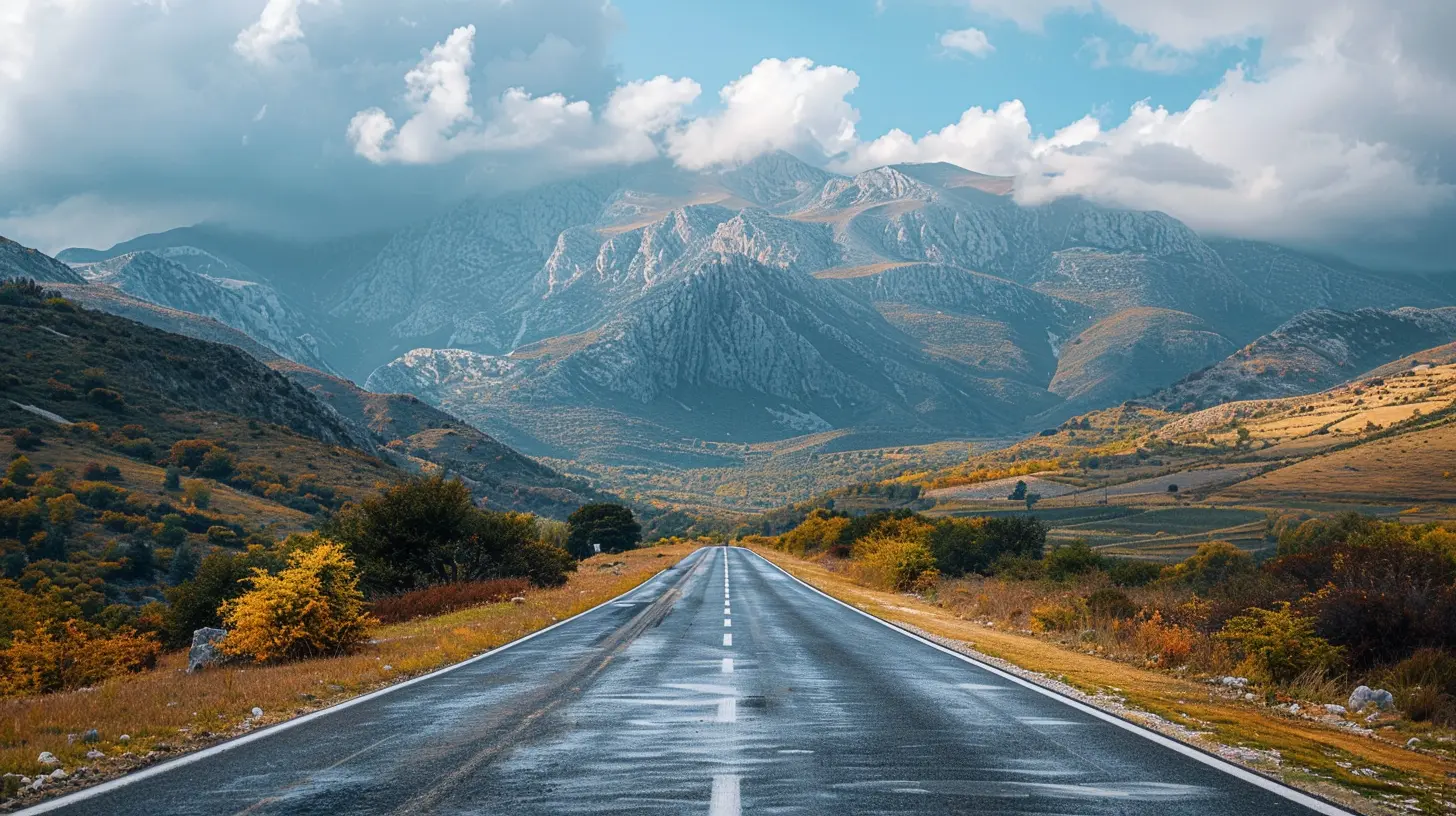
Route 3: The Transalpina and Transfagarasan, Romania
Where They Fit in a Balkan Trip
Romania sits at the northern edge of what travelers usually mean by the Balkans, but its mountain roads deserve inclusion. The Transalpina and Transfagarasan are among the most spectacular drives in Europe, and they pair naturally with a longer regional trip.The Transfagarasan climbs to over 2000 meters and is typically open only from late June or early July until late October, depending on snow. The Transalpina has a similar seasonal window. Drivers who plan a Balkan trip in May or November should not expect to drive either road. This is a common planning mistake, and it is worth checking opening status close to your travel dates rather than relying on last year's information.
Why These Roads Are Special and Why They Demand Respect
Both roads were built for strategic reasons and combine long sweeping curves with tight hairpins. The engineering is impressive, but the driving demands attention. Fog can appear suddenly at altitude, and the weather at the top can be completely different from the valleys below. Drivers should carry warm clothing even in midsummer and should not attempt either road in a hurry.The trade-off is that these roads are popular. On summer weekends, traffic can be heavy, and the experience becomes less about the drive and more about the crowd. Weekday mornings are far better.
Route 4: The Peloponnese and Mainland Greece
A Southern Extension Worth Considering
Greece's mainland and the Peloponnese peninsula offer a different flavor of Balkan driving. The roads are generally good, the distances are manageable, and the combination of ancient sites, mountain villages, and coastline is hard to match. For travelers who want to extend a Balkan trip south, this is a natural choice.The Peloponnese works well because it is effectively an island connected by a narrow isthmus, which means you can loop around it without retracing your steps. The mountain roads in the interior, particularly toward places like Dimitsana and the Lousios gorge, are rewarding but narrow. Drivers should be comfortable with tight corners and occasional livestock on the road.
When to Go and When to Avoid
Spring is excellent, with wildflowers and mild temperatures. Autumn is also good. Midsummer is hot and busy, particularly near coastal resorts. Drivers who visit in August should expect slow traffic and should book accommodation well ahead.
Route 5: The Cross Border Circuit, Serbia, Bosnia, and Croatia
A Route for Repeat Visitors
Travelers who have already done the coast often look inland. A circuit through Serbia, Bosnia, and Croatia offers cities, rivers, and a different perspective on the region. Belgrade and Sarajevo are both rewarding stops, and the drive between them passes through landscapes that most tourists never see.This route works best for travelers interested in history and urban life rather than beaches. It also demands more attention to road conditions, as some secondary roads are narrow and poorly maintained. Drivers should not assume that all main roads are fast. In parts of the interior, a 100 kilometer drive can take two hours.
A Note on Cross Border Practicalities
Each border has its own rhythm. Some crossings are quiet and quick, while others are busy with local traffic and freight. Drivers should avoid arriving at major crossings during early morning and late afternoon when commuter and truck traffic peaks. Midday is often calmer.What to Consider Before You Book
Vehicle Choice
Vehicle choice matters more in the Balkans than in many other regions. A small car is easier to park in old towns and more economical on fuel. A vehicle with higher clearance is better for mountain roads and unpaved sections. Drivers planning to include the Dinaric loop or remote Greek mountain roads should lean toward the latter. Those staying on the coast can comfortably choose the former.Rental Insurance and Cross Border Cover
This is the single most common source of trouble. Many standard rental agreements restrict cross border travel or require additional fees. Some exclude certain countries entirely. Drivers should confirm in writing which countries are covered, whether the green card is included, and what the excess is. Buying additional coverage at the counter is often expensive, so arranging it in advance is usually better.Timing and Season
Season determines everything in this region. Coastal routes peak in July and August. Mountain routes peak in July and August too, but for a different reason, since that is when the passes are open. Shoulder seasons offer the best balance of weather, crowds, and price. Drivers should also account for local holidays, which can fill roads and accommodation unexpectedly.Navigation and Connectivity
Mobile coverage is generally good in populated areas but patchy in mountains. Downloading offline maps before departure is a sensible habit. Relying solely on live navigation in remote areas is a common mistake that leads to wrong turns on unfamiliar roads.Driving Culture and Rules
Driving styles vary across the region. In some areas, drivers are patient and courteous. In others, overtaking on narrow roads is common and sometimes aggressive. Speed limits are enforced, and radar traps are frequent. Drivers should observe local norms, drive defensively, and avoid assuming that rules are enforced the same way everywhere.
Common Misconceptions Worth Correcting
A frequent misconception is that the Balkans are uniformly difficult to drive. In reality, main roads in Croatia, Slovenia, and Greece are excellent. The difficulty is concentrated in specific mountain routes and secondary roads.Another misconception is that borders are always slow. Many are quick, and the slow ones are predictable if you know the peak times.
A third is that you can plan a Balkan trip the same way you plan a trip through Western Europe. Distances are shorter, but speeds are lower and the unexpected is more common. Building slack into the itinerary is not wasted time. It is the difference between a relaxed trip and a stressful one.
Final Recommendations
For a first trip, the Adriatic coastal route offers the best introduction, with manageable driving and plenty of rewards. For a second trip, the Dinaric loop adds mountains and a sense of adventure. For travelers with more time, combining a coastal section with an inland loop and a southern extension into Greece creates a genuinely varied journey.Whatever route you choose, plan by time rather than distance, confirm insurance and border coverage in writing, and travel in the shoulder seasons if you can. The Balkans reward preparation. Drivers who arrive informed find a region that is generous, varied, and far less crowded than its reputation suggests.
all images in this post were generated using AI tools
Category:
Iconic RoutesAuthor:

Reed McFadden